Aotearoa: A homage to my homeland

A little bit of background📝
This post pays homage to the stunning beauty of my homeland, Aotearoa New Zealand. I was born in the country to an Australian mother and a New Zealand father, a descendant of British settlers. New Zealand is the land of my origins and of my childhood. It is also the place where I first ventured out on my own after finishing high school, transitioning into early adulthood after my family migrated to Australia. As I write this post I have lived in Australia for 37 years, but I am not still sure of my identity. My passport and citizenship say I am Australian - and this country has been good to me - but my heart is the Land of the Long White Cloud.
This post is largely pictorial, showcasing the magnificent of my homeland's natural beauty. I have highlighted Wellington, the place of my birth, and Whangarei (fang-ar-ay), the place of my childhood. There is a nod to Auckland, the city that felt huge and overwhelming to me as a child, from my experience of the city with my daughter (then 18) during a 2019 visit

I have many photos of my homeland, but the selection featured in this post have been taken in the digital age. Now I am showing my age! I may come back to this post to include film photos that currently live in analog photo albums. Those photos chart the experience of my childhood, and are less about the natural beauty of Aotearoa, something I didn't fully appreciate until I left. Since migrating to Australia in 1989, I have returned to my homeland only five times, in 1997, 2001, 2009, 2019, and 2025. The photos featured in this post were taken on the two latter trips. I hope my post inspires you to visit Aotearoa if you haven't already. I have had the privilege of international travel throughout my adult lift but I can honestly say that there is no country in the world as beautiful as New Zealand.

Wellington⚓
I returned to Wellington in November 2025, in part to do something special for my 55th birthday but also to visit my longtime Australian friend, AC, who had moved to the city with her New Zealand-born husband and their teenage son the previous year. This gave me a nice reason to return to the place of my birth for the first time since I was a teenager. I eagerly anticipated my homecoming and wondered how I would feel about Wellington after such a long time away. I was actually born in Lower Hutt, one of the four cities that constitute the Wellington metropolitan area.

Wellington is New Zealand's capital city, situated at the southern end of the North Island between Cook Strait and the Remutaka Range.
The city is named after the Duke of Wellington, victor in the Battle of Waterloo.
Wellington is the world's windiest city by average wind speed.
It is a relatively small capital city, with a metropolitan population of 210 000 and a wider population of 444 000 including the cities of Lower and Upper Hutt and Porirua.
Wellington has three Maori names: Whanganui-a-Tara (Wellington Harbour), Poneke (referring to the harbour's official name), and Te Upoko-o-te-Ika-a-Maui (from the legend of Maui).
So...back to my place of birth. I was collected from the airport on the afternoon of my arrival, on a cool, bleak November day. New Zealand is a beautiful place, no doubt, but the weather can be rubbish. November is supposed to be the last month of spring, but it's nowhere near as warm as my home in Australia. I was wearing a sweater that day, something unheard for that time of year of where I live now.
My first glimpse of my homeland came from our drive up to Mount Victoria, locally known as Mt Vic. This first glimpse was an immediate reminder of my homeland's beauty, but also of the grey weather. That said, Wellington Harbour is still lovely, even on a bleak day. Mt Vic is one of the most popular spots in the city for panoramic views.

Mount Victoria sits 196 metres east of central Wellington. Its Maori name is Matairangi, meaning "to examine the sky"
The hill's steep slopes reach down to the shoreline and separate the inner part of Wellington Harbour from Evans Bay.
Wellington's position in the funnel between the two islands means it is prone to strong winds. Mount Victoria is completely exposed.
There were one two fortified settlements (pā) on Mt Vic. Post-colonisation, usage included farming, quarrying, and military batteries.
My friend, AC, lives in Aro Valley, in the city's western suburbs. Throughout my whole visit I kept thinking how lucky she is to live in such a beautiful place with the views featured in the below collection. It is my dream to have a house with a view! AC's house has large picture windows in the living area, and I could quite easily have spent my whole visit drinking in the view. The changing light that bathes Wellington Harbour creates a flowing sense of the vistas from the Aro Valley elevation.

Aro Valley is named after a stream that once ran through it. The valley was from fault activity. It is surrounded by parkland.
IThe valley was first settled in the 1860s as a working-class community and later as a bohemian home for students, artists and musicians.
The area has been gentrified since the 1970s and is now a desirable inner-city suburb. It has a lower shopping and residential space and houses dotted across the hills and valleys where my friend lives.
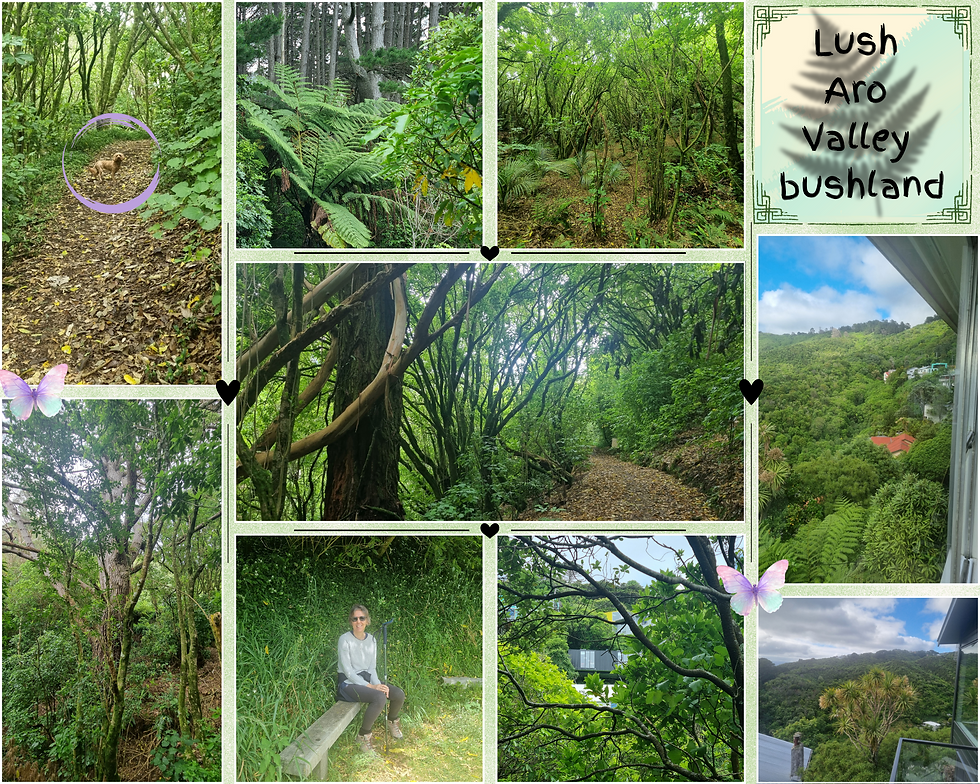
Over the course of my five-day stay I had the privilege to enjoy the absolutely stunningly beautiful bushland that surrounds my friend's house. We took little Olive for daily walks and I felt so at peace wandering through the lush bush, not having to worry about snakes as we do in Australia. Exploring the bush behind our house was a huge part of my childhood and I felt transported back there, remembering the distinct greenery and birdlife.
I was so lucky that AC wasn't working at the time of my visit so she was able to show me some of the highlights of Wellington's natural beauty. Here we are at Pariwhero/Red Rocks. The reserve has officially adopted the dual name as one of the outcomes of the settlement that addresses breaches of the 1840 Treaty of Waitangi that resulted from British colonisation. Pariwhero means "red rocks" in Te Reo Maori. The reserve includes a gravel walking track that provides access for observation of New Zealand fur seals, just beyond the rocks at Sinclair Head, between May and August.
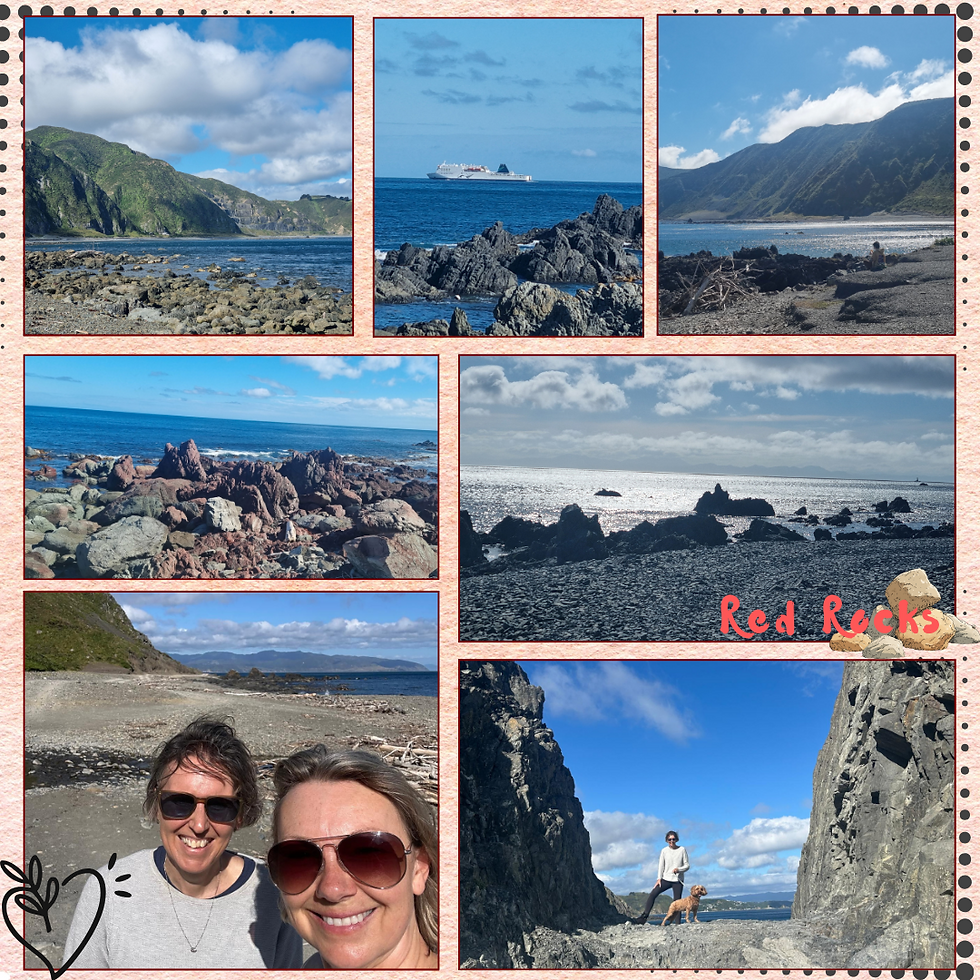
The rocks are the result of geological processes from the earliest stages of the formation of the country. There are a bunch of different types of rocks found at the site, including basaltic, pillow lava, and chert (sedimentary rock), and siltstone. The colours of the rock vary depending of the extent of oxidisation.
Maori folklore tells two stories to explain the Red Rocks at the reserve that has been classified as national significant.
In one, Kupe, the famous Polynesian explorer who is said to have discovered Aotearoa, was gathering paua (shellfish) when one clamped his hand, his blood staining the rocks.
The second story says that the red comes from the blood of Kupe's daughters who gashed themselves in grief over his absence and worries for his safety while on his voyages.
This is us at Atatürk Memorial Park. The memorial is both a beautiful recognition of the sacrifices of New Zealand soldiers in Türkiye in World War I and a wonderful place to view Tarakena Bay on Wellington's southeastern coast. The memorial was designed by Ian Bowman and unveiled on 26 April 1990 by the Turkish Minister of Agriculture. A paved forecourt and path up to the memorial were added in 1999 and the Turkish government funded the building of new gravel car parking areas.
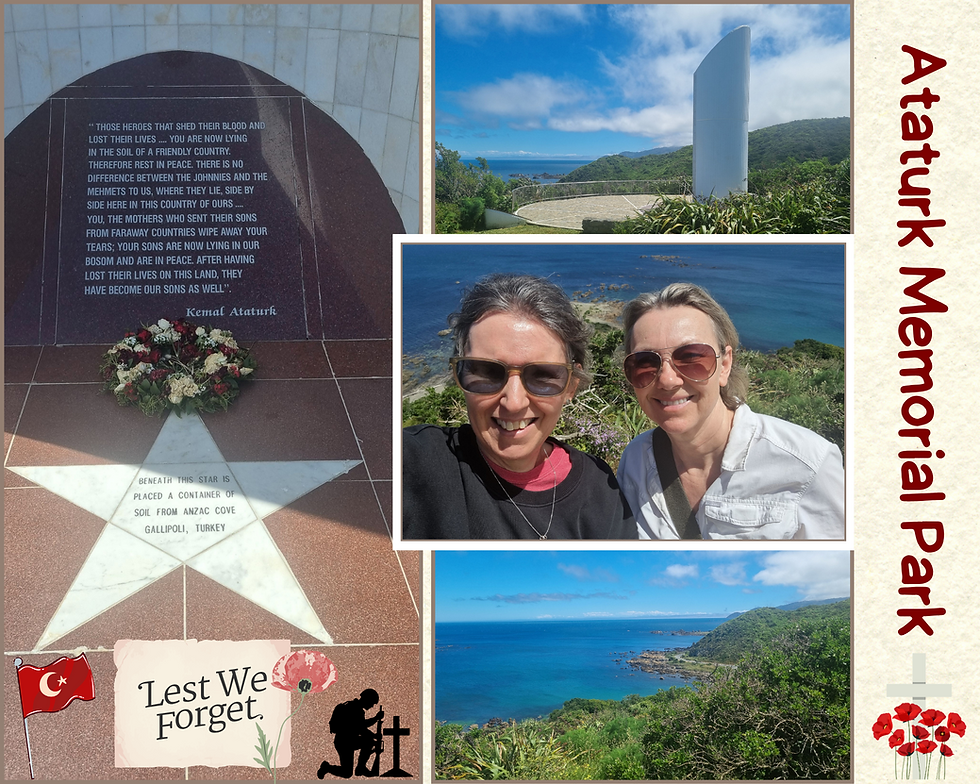
It's a bit of a climb up to the memorial, but worth it for the views. There weren't many people around that weekday afternoon so we could sit at the top and enjoy the panoramic vista and take a moment to reflect on the significance of the memorial. It was an especially moving experience for me as I have visited Gallipoli and seen where the soldiers landed on 25 April 1915 and the memorials there that now honour the fallen.
The memorial to Mustafa Kemal Atatürk, the first president of the Republic of Turkiye overlooks the Cook Strait. It was chosen for its likeness to the Gallipoli Peninsula landscape.
The memorial came from an agreement between the Australian, New Zealand and Turkish governments. It represents a response to the Turkish government's building of an ANZAC commemorative site at Gallipoli.
The memorial includes a marble crescent, a bust of Atatürk, inscriptions, and soil from ANZAC Cove.
These shots were taken on the same afternoon, as we headed further around Wellington's southeastern coast along Moa Point Road. I love the shot on the right, of the brilliantly white clouds poking through the mountain valley. Taking a drive around any of the many coastal roads east of Wellington City is a feast for the senses.

Here we are on another of the bushwalks we slotted into my time in Wellington. Belmont Regional Park was created from traditional land purchased by European settlers in the 19th century and cleared for farming. The land was reverted to native vegetation, with some left for commercial farming licences, in June 2016 when the government's ownership lease ended.

It is possible to climb to the trig at 456 metres above sea level to enjoy sweeping views over Porirua Harbour, Lower Hutt and the remnants of ancient boulder block fields. We had a lovely walk down to a stream and I felt like I was being enveloped by the lush bushland. The ferns and other native plants are so much a part of the Aotearoa landscape and of the lingering images of my childhood.
Belmont Regional Park is located in the hill between Porirua and the Hutt Valley in the Wellington metropolitan area.
The park features the historic Korokoro Dam, Pareraho Pā, World War II ammunition stores and the original main coach road from Wellington.
The park covers 15 kilometres of lush bushland and rolling hills, with pockets of native forest including rimu and northern rata.
It is the first park in New Zealand to combine land for recreation, conservation and farming.
There's quite a bit of stuff to do in Wellington besides gawp at the beautiful scenery. One of Wellington's most iconic pieces is its cable car, and you must check it out if nothing else for another opportunity to appreciate the harbour from the top of the route.
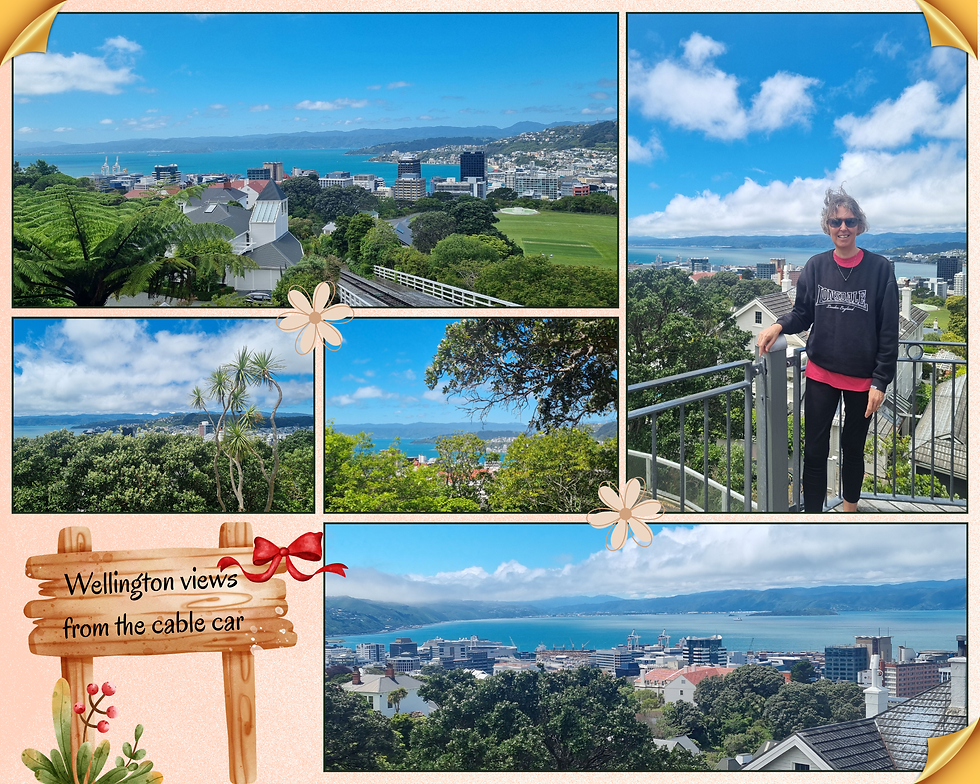
It's actually not that far to walk from the top to the bottom, but travelling on the cable car is just one of those tourist things that you do. When in Wellington and all that!

The Wellington cable car is a funicular railway that joins Lambton Quay in the city centre to the hilltop suburb of Kelburn.
The cable car takes five minutes to journey 609 metres, rising 119 metres.
The funicular was originally built in 1902 as a transport option for locals, beginning with steam-power then converted to electricity in 1933. The line closed in 1978 for a major refit to mirror the Swiss cable cars we see today.
The 2016 modernisation included the current LED tunnel lights display.
The iconic cable car is the last historic funicular in Aotearoa and one of three major public funicular railways in Oceania. There's a nifty museum and gift shop at the top of the route if you're interested in the cable car's history. The ride is a bit naff with the new light display as the car enters a tunnel, but it's still a pretty cool thing to do. I can remember riding the cable car as a kid and thinking it was all rather awesome.

The Wellington Botanic Garden is at the top of the cable car route. The garden is absolutely stunning. It sits in a valley between Thorndon and Kelburn and has multiple access points. It is possible to wander through the garden and keep going for a bit and you'll be in the city centre, as an alternative to taking the cable car. I did such a wander and then walked back up the hill to take the cable car. Double shot of Wellington icons!

Wellington Botanic Garden covers 25 hectares of land of protected native forest, conifers, plant collections, and seasonal displays.
The garden was established in 1844 and is home to some of the oldest exotic trees in Aotearoa.
The garden's Maori name is ki Paekaka. Before the garden was established, the land was used by local Maori to grow and gather food for the nearby pā (fortification).
One of the garden's most notable features is the Lady Norwood Rose Garden. I have honestly never seen anything like it before. There are 100 beds set out in a formal geometric design with roses of all kinds of colours. The flowering season runs from November to April so I was there just in time, in late November. I am someone who is particularly attuned to their surroundings and I feel at peace in natural spaces. The rose garden had such a strong impact on me. The vivid colours are breathtaking. So much pretty in the one spot!

The book nerd in me was excited to visit Katherine Mansfield House and Garden for the first time. Katherine one of New Zealand's most well-known and beloved writers. She is memorialised in the house where she grew up that is now a museum and a celebration of her life and work. I read some of Katherine's works as a child and the sporting house I was part of at high school was named after her. Katherine lived from 1888 until 1923, sadly dying at only 34 years of age of pulmonary tuberculosis in Fontainebleau, France.

I loved the historic house and its faithful homage to Katherine, but it made me quite sad reading about her life. I certainly relate to her compulsion to write. The museum is rather quaint and has a small and eclectic collection of mementos. I bought one of Katherine's books of short stories, A dill pickle, published in 1917, and a card that I have framed in my office to remember her by. The image speaks to me of a tortured soul, something I also rather relate to.

Katherine Mansfield was an important writer in the modernist movement. She wrote short stories and poetry that explored anxiety, sexuality, Christianity and existentialism.
She left NZ for England in 1903 where she attended Queen's College and later wrote within the orbit of the Bloomsbury Group, becoming friends with DH Lawrence and Virginia Woolf.
Katherine was a prolific writer and much of her work remained unpublished at her death in 1923.
Wellington as the capital city of Aotearoa houses the national museum, Te Papa Tongarewa. The museum sits proudly adjacent to Wellington Harbour. I had a lovely walk from the foot of the cable car on Lambton Quay over to the museum. The city centre has had a major facelift in recent years – and certainly is much nicer than I remember it – and now it’s the café and culture hub of the country.

Te Papa could only be described as a beautifully curated museum. I’ve been to some of the Big Ones – the British Museum, the Louvre, and the Rijksmuseum – but Te Papa would be at the top of my list of museum experiences. It’s curated in the narrative style that I appreciate, it holds enough treasures to tell meaningful stories without overwhelming, and the exhibits are beautifully presented. The museum tells the story of Aotearoa so there's less of a "stuff the British stole" vibe about it. The story of the first peoples of Aotearoa is, I think, faithfully and respectfully curated.

Entry into the museum at the time of writing is $35NZD for international visitors. I'm a rule-follower and I hate thinking I've done the wrong thing, but I asked at the ticket counter whether I would be classed as an international visitor. I explained that I was born in New Zealand but live in Australia. A warm, friendly woman didn't hesitate to allow me free entry, welcoming me home. I was unexpectedly moved by this gesture, especially when she shook her head when I offered to show my passport as proof.
There are two exhibits that I want to highlight that are my most vivid memories of my museum experience. The first is the Treaty of Waitangi exhibit. I was both impressed and moved by the honest and respectful way this key part of the history of my homeland has been curated. There is a stunning display of an original document (top row below, middle shot) and several replicas that show how many of the Maori elders who signed the Treaty simply put a symbol next to their name. What impressed me most was the openness about the problematic agreement, seen in the explanation of the differences between the English and Maori versions.

The other exhibit that moved me beyond words is the Gallipoli: The scale of war exhibition. This initially-limited exhibition remembers the sacrifices of ANZAC men and women at Gallipoli in WW1 that helped shape the Australia and New Zealand that we know today. The exhibition was opened in April 2015 on the centenary of the landing at Gallipoli and was only intended to run for four years. The popularity of the exhibition led the museum to extend it twice and it is now open until 2032.

The exhibition was created in collaboration with Weta Workshop, to provide an immersive experience that shared a deep respect for the memories of those who served and fostered empathy for the human cost of war. It certainly is a powerful journey to experience the war through eight stories. I was deeply moved as I made my way around the exhibition. The giant sculptures that took over 24 000 hours to create capture moments frozen in time. They are so lifelike, the emotions clearly so raw, that I would defy anyone not to be profoundly affected by the exhibition.
Speaking of Wētā Workshop, AC took me for a drive to the site, located in an unassuming part of the city in Miramar. There are tours and workshops on offer but I was just happy to poke around the Wellington Wētā Cave, one of two free-entry retail stores in New Zealand. I bought a cool bag from the workshop and had fun with the giant trolls out front.

Wētā Workshop has been making cool stuff for film and TV since 1987. It is separate to Wētā FX, the company specialising in digital effects owned by filmmaker, Sir Peter Jackson.
The workshop provides concept design and physical and special effects. It became known for its Academy Award-winning work on The Lord of the Rings trilogy.
The company has now diversified into video game development, immersive experiences, board games and books, large-scale public sculptures, and high-end fan collectibles.
Here is my collection of little mementos from my Wellington experience. The Welly girl card came with a birthday gift from my friend. It is part of a series of artwork and gifts by a Wellington-based artist. Love it! I bought the whanau (meaning home in Maori, pronounced far-now) ceramic figure and the Buzzy Bee at Auckland Airport on my way back to Australia. The mementos seemed like a perfect selection to pay homage to my homeland and to remember my childhood. Buzzy Bee is an iconic New Zealand toy, first designed and produced by Maurice Schlesinger in the 1930s.


Returning to my birthplace for the first time since I was a teenager was indeed a homecoming. I was able to see Wellington through fresh eyes and shake off the discomforting memories of my mother's unhappy experiences there. I am so glad that my friend and her family have found a haven in the stunning Aro Valley setting. I was reminded of the beauty of the land and of the progress made to address the wrongs of the colonial past, giving me hope that the descendants of both original peoples and settlers may live together in the future in harmony.
Whangarei🌳
I would say that Whangarei (fang-ar-ay) is my hometown as it forms the main memories of my childhood. I lived there for the 11 years of the 18 that I spent growing up in Aotearoa. I have been back to my hometown four times since I left, the last trip of which was in January 2019 with my daughter, E, who was eighteen at the time. I was taking a work break for a few months to work full time on my PhD and we had flyer miles to use that enabled us to travel for free. My childhood friend, whom I met in the first year of primary school, graciously hosted us for five days, collecting us at the airport when we flew into Auckland. This is where they live, on the outskirts of the city. These are the lush landscapes of my childhood memories, and they stand in stark contrast to the brown, dry spaces I now inhabit in Queensland.

Whangarei is the northernmost city of Aotearoa and the largest settlement in Northland.
The population is around 56 000, not much more than what I was when I was a kid.
There are several traditional Maori stories associated with its origins, all relating to its harbour.
Captain Cook and his crew were the first Europeans to sight the harbour in 1769.
Parihaka, a 259m dome, is the heart of the city's volcanic field. It is 20 million years old.
The 2019 trip was intended to be a wander down memory lane after a 10-year absence from my homeland, and to show E where I grew up. My childhood friend, SH, indulged my wanderings, taking us to our primary and high schools, to the bakery where I worked weekends as a teenager, to a favourite coffee shop in the building where my mother worked, and to the house my father built for our family. Revisiting these places that are so much symbolic of closed chapters of my life, so far removed from where I am now, made me unbearably sad. This feeling was especially so when we stood outside my childhood home. SH encouraged me to knock on the door and the current owner invited us in. The state that house is in now, after all we went through to build it and after years of loving care, was a shock to the system.
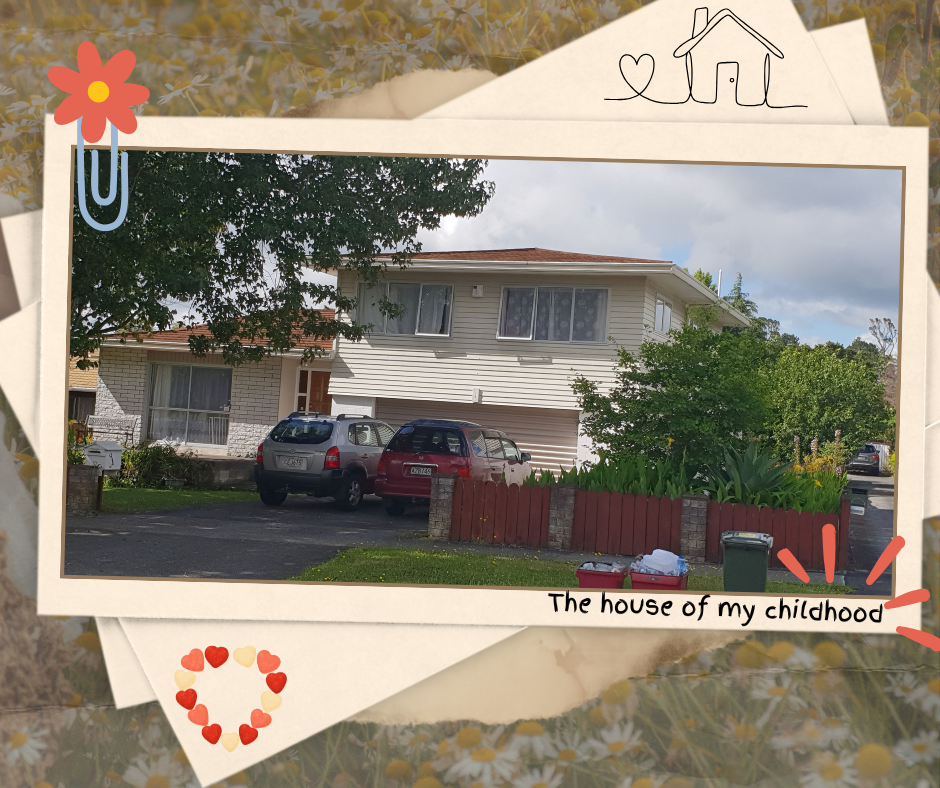
On the plus side, Whangarei Harbour is still rather lovely and has been given a recent facelift, so it looks pretty schmick now. We had a wander around and then enjoyed some feijoa ice cream. Feijoas are the taste of my childhood! They are a species of flowering plant in the myrtle family and native mainly to parts of South America (Colombia, Brazil and Uruguay). The fruit pulp is guava-type, the shape spherical, and the size is egg-like. I don't have the words to explain the taste but the interwebs tell me it is like a tropical pear with a slightly minty, floral aftertaste.

One of my most enduring memories of my childhood in Whangarei is trips to the Falls on the edge of the city, clambouring down to the bottom then labouring up the switchback path to the top of the falls. As I kid I thought it was the most beautiful place I had ever seen, and adult-me still thinks this.

Whangarei Falls drop into the Hatea River some 26 metres over a basalt lava flow.
The original name for the falls was Otuihau.
They have been a popular picnic spot since the 1890s. The land was bought by Archibald Clapham in the 1920s who donated 400 clocks to what became Clapham's Clocks Museum.
A local business organisation raised money in the 1940s to buy the land on behalf of the town and turned the area into a public park.
Whangarei has many stunning beaches on its doorstep, never overrun with people as far as I can remember. What I do remember is the journey to get there - often on windy, loose-metal tortuous roads. Totally worth the car sickness to experience places like this, though!

It was also rather nice to know that some things don't change and that Whangarei has not given into commercialism or seen a stampede of people detracting from its natural beauty. Kai Iwi Lakes is as isolated and infrastructure-free as it was when I was a kid.

E and I were treated to one of the most spectacular sunsets I have ever seen while ostensibly following my friend's husband to the beach while he went fishing. We were at Ruakaka, around 30 kilometres south of the city. I couldn't do this incredible experience justice without creating multiple collages to showcase the stages of the sunset. The first collection was taken before we realised just how beautiful it was going to be.
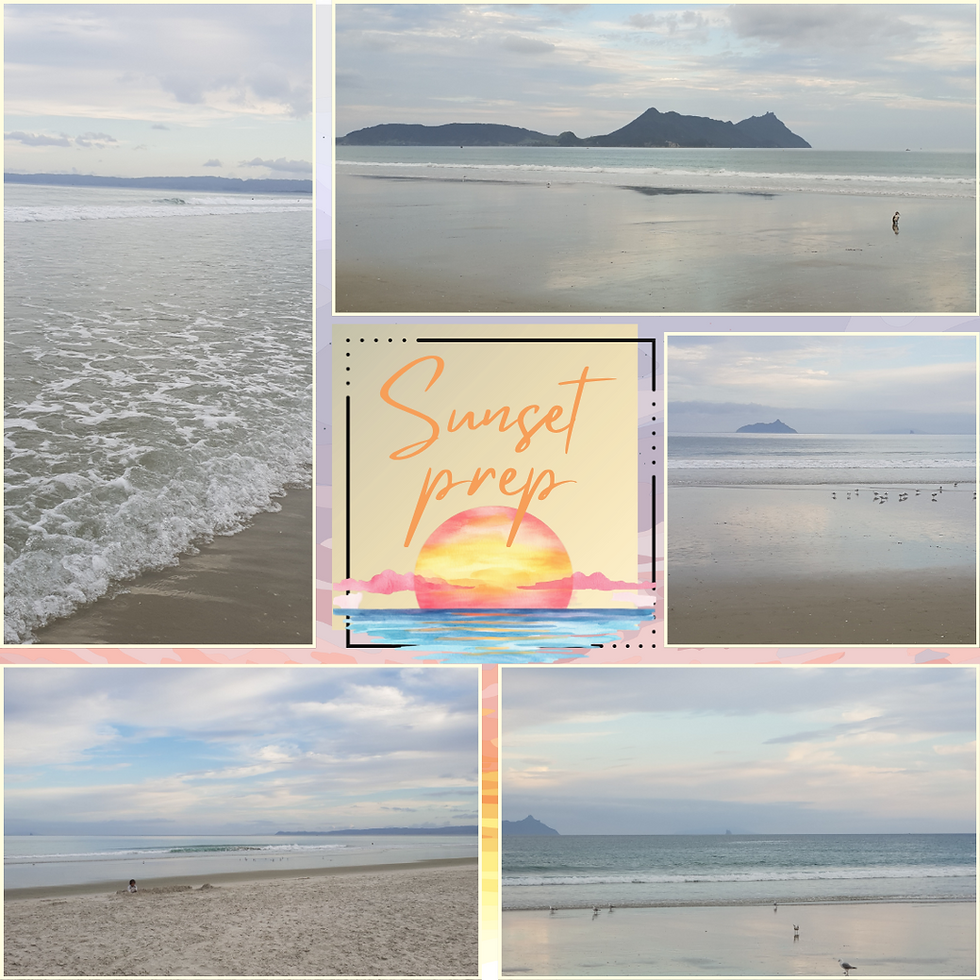
Here is my attempt to capture the time lapse and changing colours of the sunset that evening. Isn't it magical?

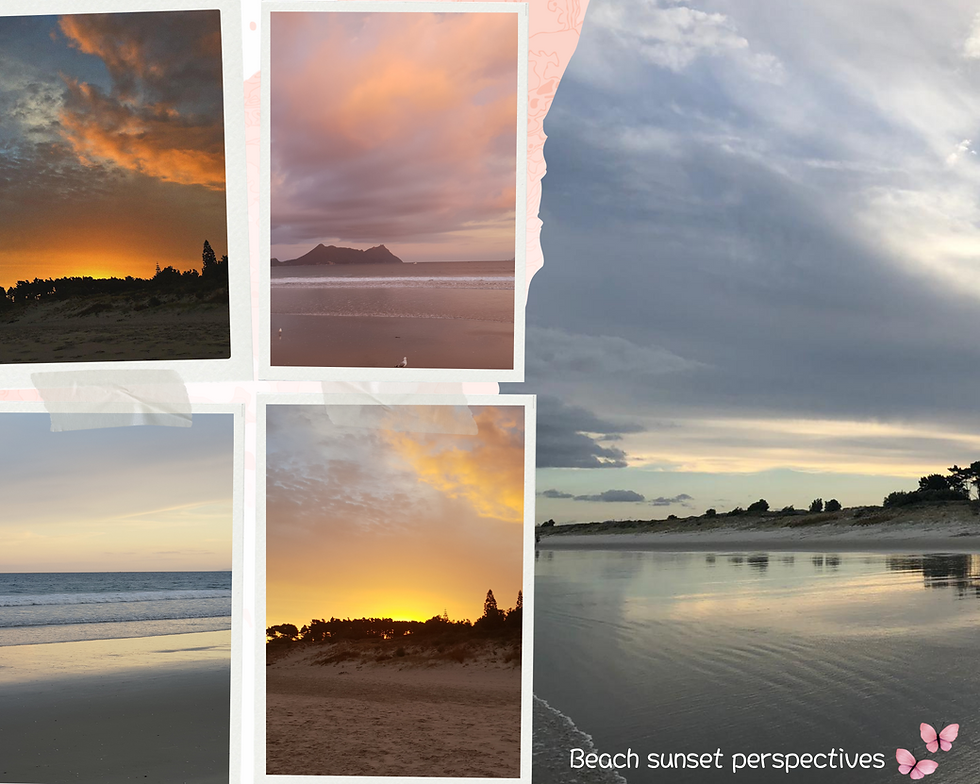
I don't think I have ever seen anything like these pinks. The pinks! Gorgeous.

It had been an emotional trip down memory lane in Whangarei, but the Ruakaka sunset left me feeling all the love for my childhood home and such a sense of joy that E and I experienced it together.

Finishing off with a collection of different perspectives on the beach over the course of our experience.
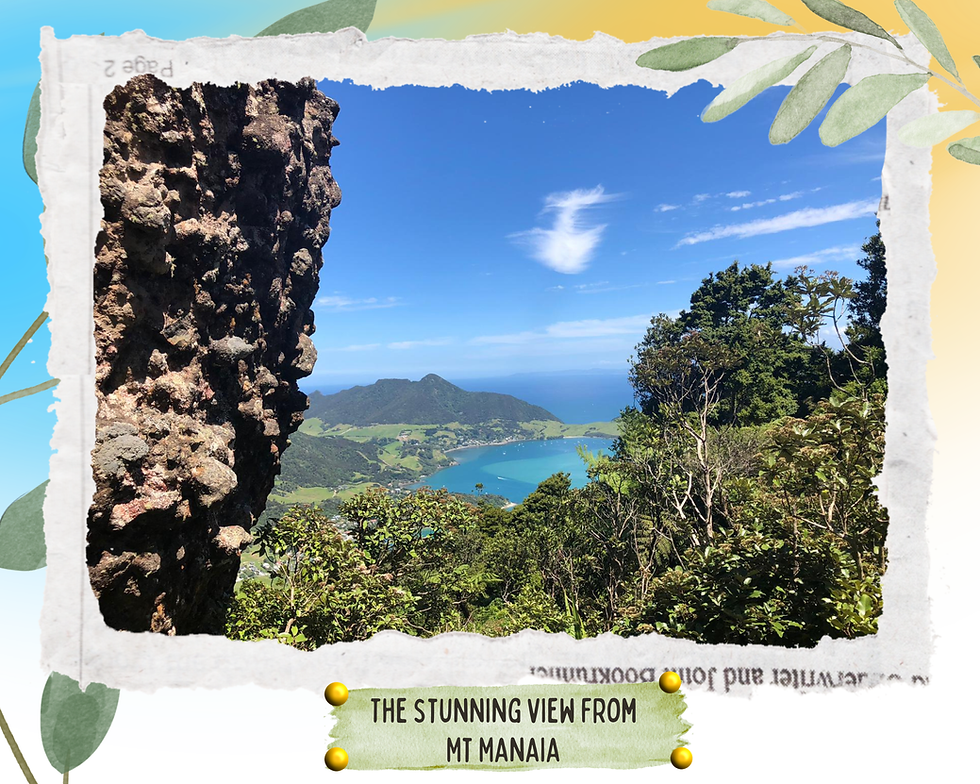
Mt Manaia had always seemed to me to be unreachable as a kid. My primary school would camp near there each year, but only the hardy were given the chance to climb the mountain, especially back on those days when there was no proper track. Returning to the mountain as an adult and making it to the top was such a thrill.

Mt Manaia is part of the scattered remnants of volcanic intrusions that erupted with force some 16-20 millions years ago.
The stone peaks atop the mountain are said to represent the ancestral chief, Manaia, and his family turned to stone after an infidelity dispute. Another legend has Manaia abducting the wife of a rival chief who pursued them and their children along the ridge, then the weather god Tawhirimatea turned all five fleeing figures to stone by a lightning strike.
The mountain sits at an elevation of 420 metres above sea level. The out-and-back hiking trail is around a 4 kilometre trek up 1110 steep steps. We were totally knackered, but so proud of our achievement.

Oh, boy, the views are simply stunning. Parts of the hike give way to the vista from natural rocky outcrops and other spots are shaded by regenerating native bush and kauri trees. The hike provides views of the beautiful harbour and Bream Heads and the Hen and Chicken Islands.

There are three more Whangarei icons to feature from that trip that are all enduring images of my childhood. The first is giant kauri trees. This is Tane Mahuta who lives in Waipoua Forest north of Whangarei.

Tane Mahuta's age is not known, but it is estimated to be between 1250 and 2500 years old. The tree is the oldest living kauri tree known to stand today.
Some stats: 15.44m girth, 17.58m trunk height, and 45.2m tree height.
Tāne Mahuta is the god of the forests and of birds. He is also known as the guardian of mankind, credited with separating the earth and sky to bring light into the world and shaping the first human.
The second icon is the Stone Store at Kerikeri, 84 kilometres north of Whangarei. The original building was used as a base for Christian missions in the area in the early 19th century. Later, the building was tenanted and used as a post office, a school for local Maori children, and a store.

I've lost count of how many times I've been to the Stone Store. It was such a common field trip for Whangarei kids and a place we returned to as a family many times when visiting the Bay of Islands. I bought the print in the above collection on my 2009 visit and it hangs in my house as a reminder of my hometown.
The Stone Store is the oldest undamaged stone building in Aotearoa.
It was completed in 1836 by the Church Missionary Society as a warehouse, built to a Georgian design by John Hobbs.
The building was eventually purchased by the New Zealand Historic Places Trust. it is now registered as a Category 1 building with Heritage New Zealand.
The final enduring image of my childhood is Opononi. It is still a tiny settlement 134 kilometres from Whangarei on the west coast. I remember Opononi as a beautiful but isolated place. I was also fascinated by the dolphin story as an animal lover.

Opononi is a tiny settlement on the south shore of the Hokianga Harbour in Northland.
The name roughly translates as place of crooked fishing pot.
The settlement began in 1941 after a British settler arrived and bought 700 acres of rough land.
The town is famous in Aotearoa for Opo, a bottlenose dolphin that followed fishing boats in the area in the 1950s and came into shore to play with children during the summers of 1955 and 1956.
Opo's story🐬 Opo became a local celebrity and visitors flocked to the tiny town to watch her. Locals requested official protection for her and a law was passed to do so, but sadly, she was found dead on 8 March 1956 in a rock crevice at Kouto Point north of the town. There were suggestions she had become stranded and some thought she had been killed by fisherman. Opo's death was reported across the country and she was buried with full Maori honours in a special plot near the Opononi War Memorial Hall. |
I'm finishing the Whangarei part of my post with my favourite shot taken from our hike to the top of Mt Manaia. You sure are pretty, Aotearoa!
The trip down memory lane made me realise how far I have come since I left my hometown in 1987. It made me feel quite sad, though, and I'm not really sure why. Perhaps it was the distance between then and now and all the things in between. Perhaps it was being there with my friend who represents my childhood, not the present. I have lots of happy memories of Whangarei but they are tinged with a lingering sense of the surreal, as if the memories happened to someone else. I feel like someone else!
Auckland🌉
Growing up, Auckland always loomed large to me, a big, bold city that overwhelmed my shy, introverted self. I still see it a bit that way. Auckland to New Zealand is to me what Sydney is to Australia or Los Angeles to the United States. It's the flashy, buzzy, expensive city. Wellington feels like what Melbourne is to Australia or New York is to the United States - the cultural hub of the country. I spent most of my childhood in Whangarei, a city at the time of only 40 000 people. Auckland was where the cool kids hung out, or the Big Smoke. The city is mostly a place that lives in my memory for shopping trips and the airport, the gateway to our journeys to Australia for my mother to assuage her homesickness.
Auckland is the most populous city in Aotearoa and the fifth-most in Oceania.
The city lies between the Hauraki Gulf, Manukau Harbour, and the Waitakere Ranges.
The Auckland isthmus was first settled around 1350 as it was rich and fertile land.
The city was chosen as the capital of New Zealand after a British colony was set up in 1840, to be replaced by Wellington in 1865.
Auckland now has the fourth largest foreign-born population in the world.
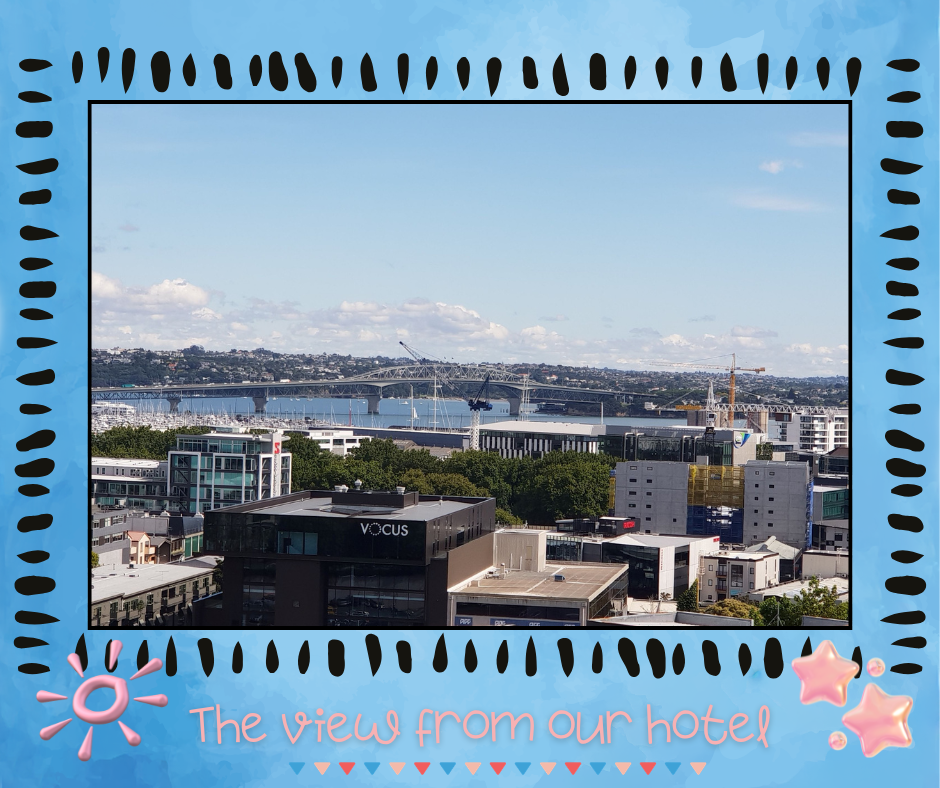
E and I spent a few days in Auckland (Tamaki Makaurau) as part of our January 2019 trip, one night spent with another childhood friend and his family and a three nights in a city centre hotel. The hotel was a bit of a hike up a hill, but we had a nice view of the Auckland Harbour Bridge, with bonus crane.
My friend took us up to One Tree Hill after dinner to experience the sunset when we stayed overnight with his family. Fifty-three volcanic centres make up the Auckland Volcanic Field and One Tree Hill is one of those. Awesome, right?

One Tree Hill is 182-metres high. The hill's scoria cones were erupted from three craters some 67 000 years ago.
The ancestral hill once held the largest pre-European pā in the country, Maungakiekie.
The original single native totara tree once stood atop the hill (hence the name) as a sacred symbol of leadership. It was cut down by settlers in 1852. A pine tree was later planted to replace it.
An obelisk stands at the summit today to honour the hill's Maori ancestors.
We were so fortunate to have lovely weather which meant stunning Auckland Harbour was on full display. The harbour is one of the best things about the city, I think. The volcanic landscape, clear blue waters, the bridge and Sky Tower, and the maritime elements make for a vibrant vista. There are boardwalks, paved pathways, playgrounds, shops and cafes all along the waterfront from Quay Street round to the marina, once a pretty dodgy part of the city. Spectacular stuff!

Auckland Harbour is properly known as Waitemata Harbour. The name means Te mata waters. It is the main access by sea to the city.
The harbour is crossed by the Auckland Harbour Bridge and is matched on the southern side by the shallower waters of Manukau Harbour.
The 180km-harbour connects the port to the Hauraki Gulf and the Pacific Ocean. It is protected by the North Shore and Rangitoto and Waiheke Islands.
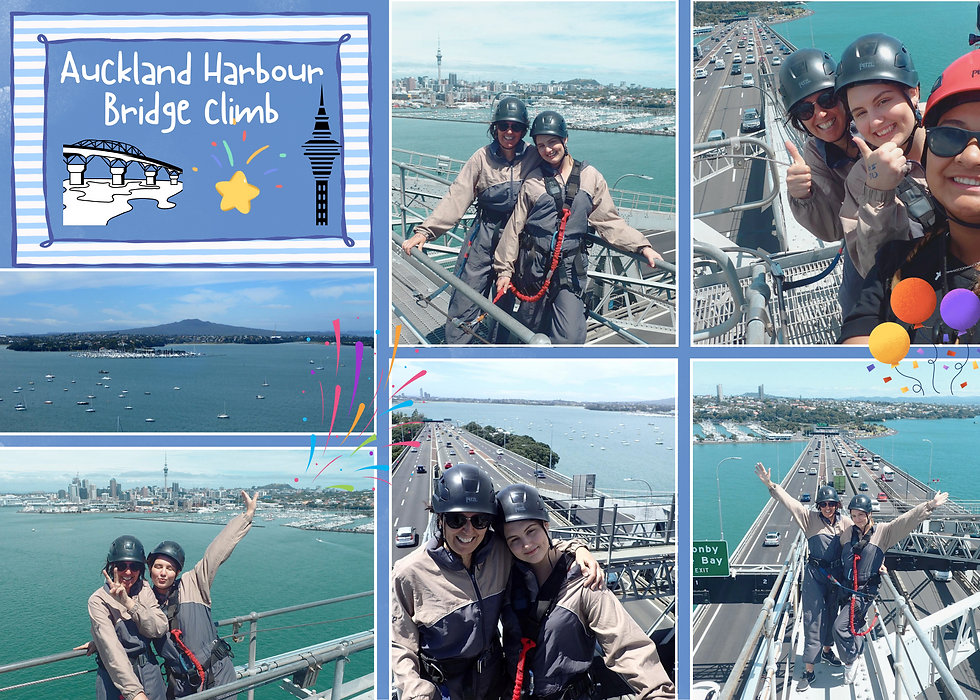
This is the first time I've ever done a bridge climb. It was a brave thing for someone like me to do! I have woeful balance due to full and permanent hearing loss in my right ear after discovery and removal of a tumour in 2016. I am also generally not fond of heights. The climb is quite scary at first as the steps aren't a solid block of steel, as you can see in the top right-hand shot. I am so proud of myself for doing it, though, and having the experience with my daughter. We were so fortunate with the weather (and our super enthusiastic guide). The views are 100% worth the anxiety. It's awesome to stand above the traffic and drink in the panoramic views.
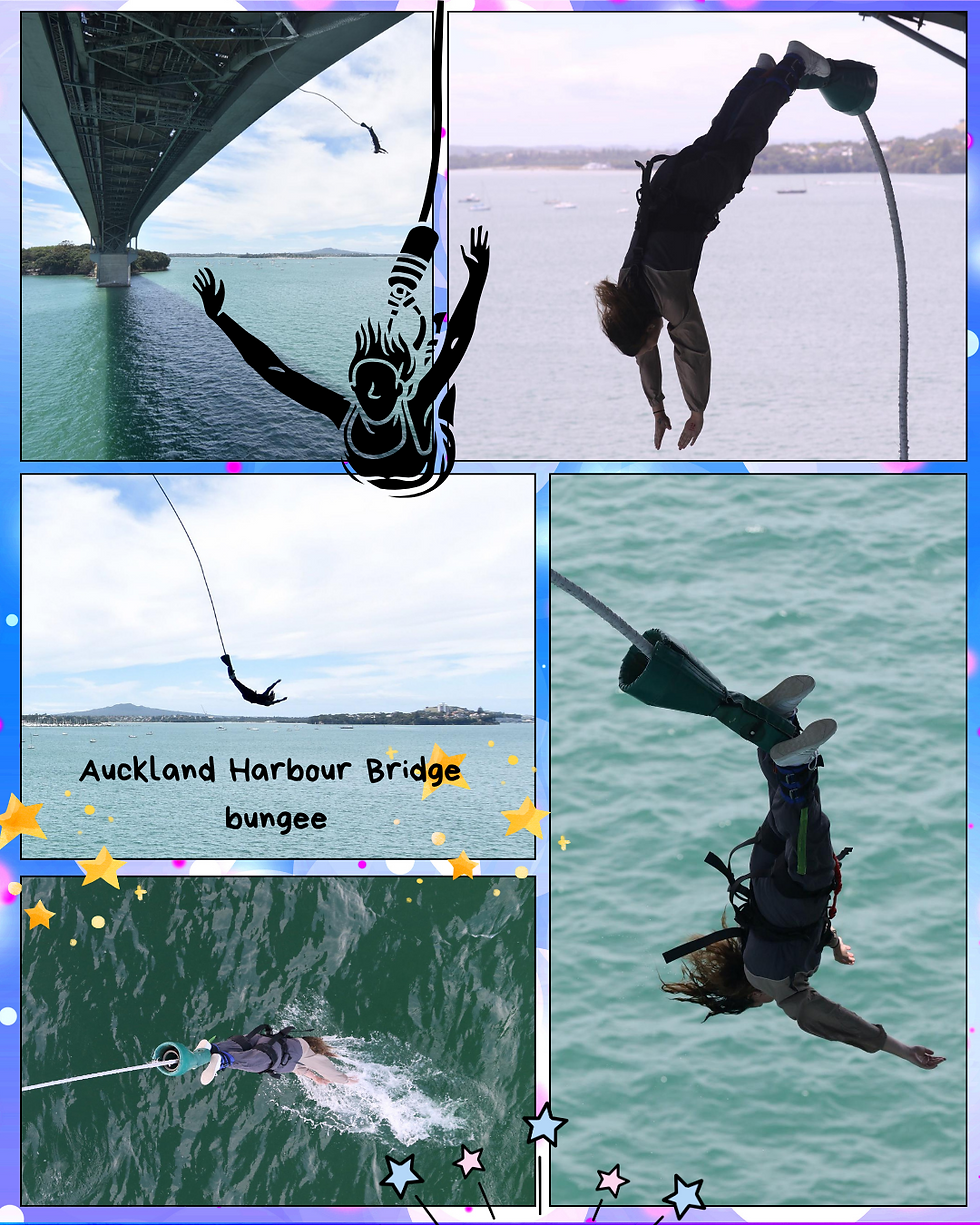
The bridge climb was the entree for the main event. E wanted to do the Auckland Bridge Bungy because...she is fearless. I wanted to be there when she launched herself off the bridge so we added the climb to our ticket. I realised afterwards that I could have gone with her without the bridge climb and stood behind the launching pad or watched her from the viewing pod under the bridge. I remember thinking how expensive it all was. Looking up the website to write this post, it is now $260 for the bungy and $165 for the climb. An unforgettable experience, though!

Jumpers are given a video to remember their experience and a bunch of photos as taken your own is not permitted. The photos in the above and below collection are from the bungy company. Fabulous shots of a very cool experience.
Auckland Harbour Bridge opened in 1959. It spans 1020 metres across Waitemata Harbour, connecting the city centre to the North Shore.
The bridge carries over 170 000 vehicles per day, making it the busiest bridge in the country.
The bungy pod is attached to the bridge's central arch. The purpose-built platform puts has jumpers 40 metres above the harbour.
The bridge is the only place in New Zealand or Australia where a commercial bungy ends with touching the ocean.
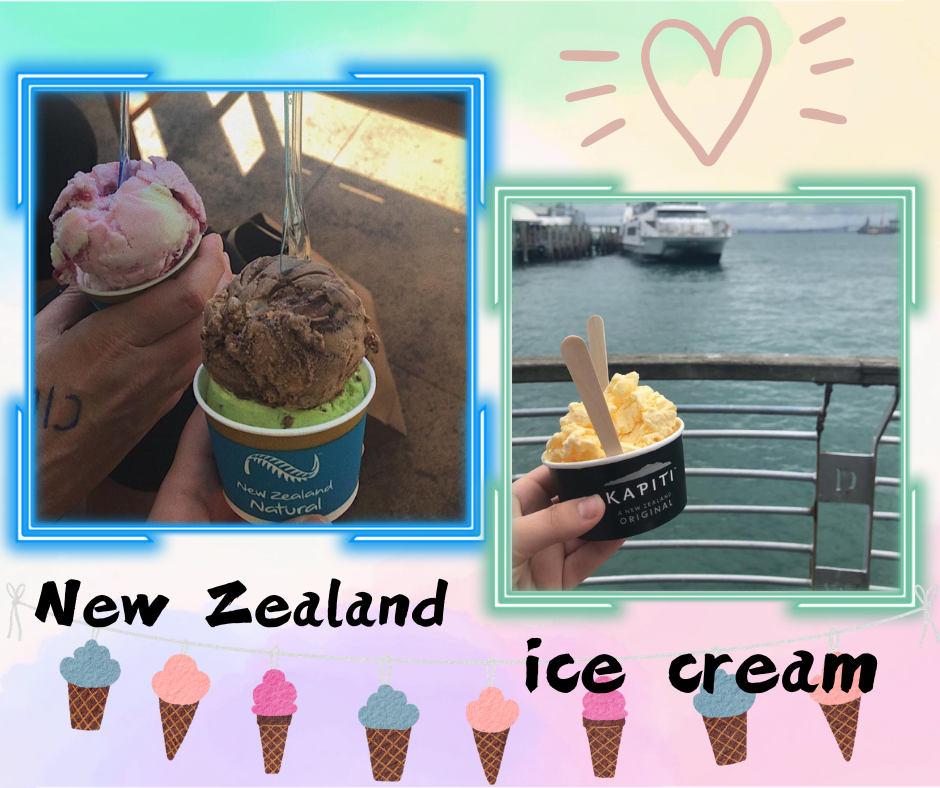
We definitely needed an ice cream after our climb, not that any excuse is required to eat New Zealand ice cream! That's one of the things I miss about living in Australia. The food in my homeland is of much better quality.
Auckland will always be the place for me where I got my first tattoo. It feels antithetical to my nerdiness, but I'd always wanted to get some ink. I like the way tattoos are a form of expression and a permanent and constant reminder of something meaningful. E was a tattoo veteran even then and she was keen for an Aotearoa tattoo. We decided to get a silver fern, one of the symbols of New Zealand, tattooed on our wrists in mirror image. It might sound a bit naff, but this was a watershed moment for me, for the experience with my daughter, the homage to my homeland, and the opening of the floodgates for more self-confidence and self-expression.

I must admit to being super anxious about the pain and I could feel my heart rate go up as the artist began her work. I was surprised at how little it actually hurt! That said, the tattoo is only small! Just for the record, I have four other tattoos now.
The silver fern (ponga), or cyathea dealbata, is native only to Aotearoa.
Its glowing white undersides were once used by Maori to navigate the forests at night.
The silver fern was adopted as a shared national emblem in the 1880s, representing the country's unique identity and the qualities of endurance, power and strength. The unfurling tip (the koru) symbolises new life and growth.
The emblem is used by national sporting teams and is on the NZ coat of arms.
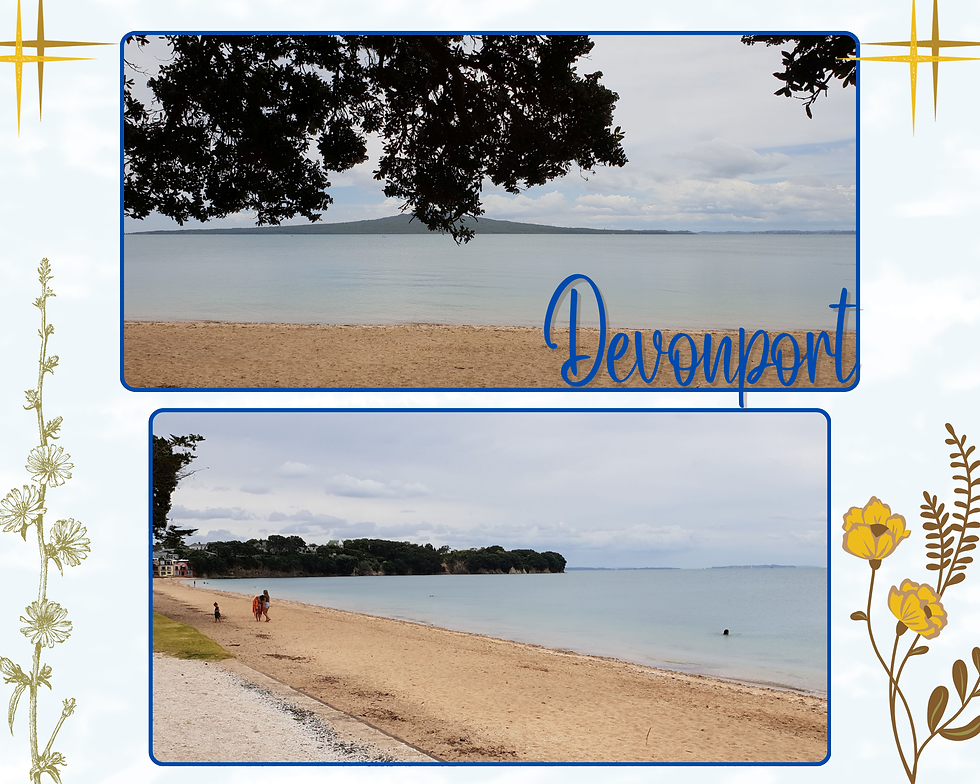
I remember when I was a kid that taking a trip to Devonport felt like a cool thing to do. E and I took the ferry across from the Auckland Harbour Ferry Terminal at the bottom of Queen Street. You can of course drive to Devonport but the ferry is a nice way to experience a bit of the harbour. Travel time is around 15 minutes, ferries leave every half hour or so, and the cost at the time if writing is $7.80NZD.

Devonport is a harbourside suburb of Auckland, located on the city's North Shore, forming the northern end of Waitemata Harbour. It hosts the Devonport Naval Base of the Royal New Zealand Navy.
The peninsula is home to three volcanoes of the Auckland Volcanic Field, the oldest of which last erupted 87 000 years ago.
The earliest evidence of Maori settlement dates back to the 1350s with the landing of the Tainui migration canoe, one of great canoes that brought Maori from Polynesia.
Devonport is basically a seaside village. There are volcanic mountains to explore with panoramic views (as my photos above show) cafes and boutique shopping, a navy museum, and the beach in the below shots. What I remember most about our experience is talking to a pair of other "tourists" on the ferry on the way back. It was an odd feeling, being seen as a tourist myself in my own country!
Auckland still overwhelms me and still feels like a place for the cool kids, not me. That said, I now have some wonderful memories of the city as a grown up and a "tourist".
Experiencing the bridge climb with E and watching her bad ass her way through the bungy jump will always have meaning for me beyond how I view the city through my childhood eyes.
Getting inked: My first tattoo, the mirror image with E's tattoo, and a permanent reminder of my homeland

My return to my homeland in 2019 and 2025 solidified the enduring images of my childhood and reminded me yet again of the incredible beauty of Aotearoa. There is something special about seeing your childhood through adult eyes. My experiences in Whangarei and Wellington were quite different, though, largely I think because of the company and the nature of my memories.
Being in Wellington again, with a friend who is part of my adult life and who is new to the city and loving being there, gave me a renewed appreciation for the place of my birth. Seeing Wellington through fresh eyes helped me shake off the remnants of my mother's unhappy experiences there. Wellington is a small city for a capital and there is something warm and intimate about it, despite the often rubbish weather. I loved the architecture as well - so many interesting and unique houses, built on hills, giving the place a San Francisco vibe. I was also super impressed with the progress Aotearoa has made to address the wrongs of its colonial past and how present Maori culture and language are in everyday life. Australia has a lot to learn from my homeland.
I've stayed away from posting photos and reflecting on the return to the house I lived in until I was six years old as the suburb, Stokes Valley, is kind of depressing. My friend's life in Wellington in the beautiful Aro Valley is something I'd prefer to remember and celebrate. I was amazed, though, at how deeply I remembered places in Stokes Valley and Lower Hutt given how young I was when I left.
My Whangarei experience was an odd one. Being with my friend who had lived away from our hometown but then returned made me feel inexplicably sad. I couldn't return to live there; it would feel too much like I wasn't moving forward. Perhaps my sadness was the juxtaposition of my childhood and my daughter's presence, a sort of clash of two distinct parts of my life that somehow didn't seem to belong together. Perhaps this feeling is about the emotion of a life well lived in a different place mixed with the sense that I have moved on. This should make me feel joy, so I am not sure why it didn't. I feel now that I'd not be keen to return again to Whangarei. I think I prefer to preserve the memories of my childhood and remember the stunning natural beauty of the city where I grew up, something I didn't fully appreciate until now.


Comments