The big, brown land I call home

A little bit of background📝
This post is a little different to the travel posts on my blog. It's less a "travel" post and more a celebration in pictures of Australia, the big brown land that I have called home for 30+ years. I was born and grew up in Aotearoa New Zealand. This post pays homage to my homeland. Australia is the count (ry of my adulthood, a place that has been good to me since I made a permanent move across the Tasman in 1989.

I call Australia home but even after all these years, I am still unsure of my cultural identity and my connection to this land. I have lately experienced a much stronger pull towards the place of my birth. I live in a hot part of Queensland, yet I am not a fan of the heat, nor am I in any way shape or form a surfer chick. I don't much like swimming even. I still feel like a passenger on a journey to somewhere, with a long layover in Australia. The warmth of the place I call home envelopes me and I have lived a full life here. So Australia is the place where I live, not where I belong.
I'm not sure why I feel this way, but I do think it has something to do with how we create connections, what is most meaningful to us, and how our experiences and our memories frame those connections. I have had the privilege of quite a bit of travel beyond my now-home and my homeland. Places far away are the ones I connect with the most, partly for the experience of travel and of being transported to places new, and partly for the wonder of all things historic, cultural and iconic. These places have also given me many treasured memories of landscapes, of architecture, and of the diversity of our planet and the lives of the people who inhabit it. I think it's also because international travel makes me feel somehow free. from the anxiety that plagues my life.
The below map shows the places featured in this post. I am somewhat ashamed to admit my Australian geography is woeful (to be fair, it is a HUGE continent) and I have seen more of the world beyond its shores. That said, Australia, you have given me an incredible life and I will be forever grateful that you took me in. This post celebrates the unique beauty of this country I call home, of the places and spaces I have chosen to highlight from my experiences since migrating here. I have mostly stuck with explaining how or why I came to be there and what the images showcased in this post represent.

Toowoomba: A mixed bag of emotions
I lived in Toowoomba, in the state of Queensland, for fifteen years after I first moved to Australia. This was largely because my parents and younger sister had settled in the city the year before I arrived. Toowoomba is also an hour away from my mother's home town of Warwick, and she had finally settled back in the country of her birth where she felt that she belonged.

Toowoomba sits 132 kilometres west of Queensland's capital city of Brisbane. It is the second-largest regional centre in the state.
The city was founded in 1849 on the lands of the Giabal and Jarowair people.
It sits on the Great Dividing Range, around 700 metres above sea level.
The city boasts architectural remnants of its Victorian heritage, loads of pretty parks, a vibrant food and coffee culture (well, now anyway, not when I lived there!), and an annual Carnival of Flowers.
Toowoomba is definitely a mixed bag of emotions for me. It will forever be meaningful as my starting point for a new life in Australia, the place of my first university degree and launching pad for my professional journey. That said, I found the city to be parochial and conservative and I found it hard to fit into existing social groups. I navigated the transition to Australia from Aotearoa as I was also still finding my feet as an adult and struggling with a pathological lack of self-confidence and the hangover of a teenage eating disorder. The second part of those 15 years was all about meeting my husband and building our family. Both of our children were born in the city. I have no shame now in admitting that mothering infants and pre-school-aged children did not come easily to me. My postpartum challenges have coloured my recollections of the city, I think.
I have loads of photos of my Toowoomba experience but they are mostly from the analog age and now sit pasted into albums that are gathering dust in a cupboard. This was not the era of endless snapshots of life nor was there any social media to post those snapshots. We were economical about what we captured on film, and most of the photos I have from this era are about ordinary life.
The images of Toowoomba that I have included here were taken in 2019 when I returned to the city to work at the university (now UniSQ) after a 15-year absence. I was based at the Brisbane campus but spent blocks of time in Toowoomba working on the redesign of the MBA program. The Japanese Gardens in the below images are a reminder of the time I spent studying at the university in 1990-1992, my first professional experience in Australia from 1994-2004, and my later return as a staff member between 2019-2021.
The gardens were opened in 1989, the year I settled in Toowoomba. They cover three hectares of land on the northern side of the campus, featuring 230 species of Japanese and Australian native trees and plants.

One of the most beautiful parts of the city is Picnic Point, with its views of Tabletop Mountain (top left-hand shot). These stunning sunrise shots were taken on an early morning walk. I stayed with a friend when I was working on the campus who lives near the lookout. Picnic Point and its adjacent parkland is heritage-listed, sitting on the crest of a prominent bluff along the top of the Great Dividing Range.

Brisbane: My home from 2004 onwards
We moved to Brisbane in 2004 in search of challenges and opportunities, when our children were 6 and 4 years old. This was the best thing we could have done and I will always be grateful for the opportunities the move has given me. Brisbane is no London or New York, but it has created a door into the world that I otherwise would have been able to step through.
Brisbane (Meanjin) is Queensland's state capital. It is the largest city in the state and the third-most populous in Australia after Sydney and Melbourne, named after Sir Thomas Brisbane, Governor of New South Wales from 1821 until 1825.
The city grew out of the Moreton Bay penal settlement in 1824 as a place for secondary offenders from the Sydney colony.
The Meanjin region has been occupied for more than 22 000 years by the Yagar, Turrbal and Quandamooka peoples.
I've chosen the first set of images from the early digital photo era to showcase the beauty of my sunburnt state as we enjoyed it when our children were young. The beach features heavily, as one would expect.

That's our son, D, in the middle of the above shot, with our neighbours whom we spent quite a bit of time with in the early Brisbane years. Our daughter, E, is featured in the below shots, again with our neighbours.

We spent an amazing mini-break with our neighbours on Moreton Island in 2008. My husband, W and the kids had a crazy dirt bike experience and the kids slid down the massive sand dunes. We also experienced dolphin feeding at the resort. Magical!

This is early spring in my part of Australia, barely registering in the grand scheme of winter things. Here are our kids with our neighbours again, this time on a beach on the Sunshine Coast north of Brisbane.

This is Raby Bay, a tiny beach inlet a short drive from our house in the eastern part of Brisbane. There are very few natural beaches in Brisbane, mostly bayside spaces. The stunning beaches that Queensland is known for are north and south of the city.

The Brisbane River winds its way through the city and out into Moreton Bay, carving up the urban areas into two side with distinct vibes. The muddy river is consistently brown, but the blinding Queensland sun makes it look rather pretty. Most of the below shots were taken in autumn or winter!

An artificial beach was opened in 1992 in the centre of the city after the site was transformed from Brisbane's World Expo in 1988. Southbank was a lovely go-to place for school holidays when our kids were young.

I used to walk across the Goodwill Bridge from the train station at Southbank when I worked at Queensland University of Technology from 2009 until 2014. The university is the only campus in the heart of the city, sitting along the northern bank of the river and adjacent to the city's botanic gardens.

Looking at this collection of shots of the city, it looks pretty nice, right? Actually, it is rather, especially since the sun and the blue skies in the below shots are pretty much standard for Brisbane all throughout the year.

And here are a couple of night-time shots, showing off Brisbane in a sparkly setting. I took these walking to the bus one evening from my office building when I worked in corporate training for a global travel assistance company.

The consistently incredible (albeit humid) weather makes for some glorious sun rises. The sky in Brisbane feels so expansive to me, especially since it is nearly always blue and cloudless. It's something I immediately notice upon returning to the city after international travel. I am yet to find a sky as open and expansive as my home city.

The sunsets are rather nice, too.

I'm finishing off this ode to Brisbane with one of my favourite city views shots, taken from Camp Hill where we rented a house from January 2022 until August 2023.

Adelaide and surrounds: The Great Australian Bight
The map I posted at the beginning of this Australian pictorial celebration shows Adelaide in the state of South Australia, in the part of the country where it looks as if someone has taken a bite out of it. Adelaide is a city I have visited three times, all for work. The first time was in 2015, when I flew down to present at the University of Adelaide on an online course I had developed. The second time was in 2018, when I spent a week in the city attending a higher education conference and working remotely. The third was in 2026, for one of the triannual national meetings for the national mental health in education initiative that I now work for and have done so since October 2024.
Adelaide (Tarndanya) is the capital of South Australia. The traditional owners of the land are the Kaurna peoples. The city was named in honour of Adelaide, wife of King William IV (1830-1837) after a freely settled British colony was founded in 1836.
The River Torrens flows through the city, from the Adelaide Hills into the Gulf St Vincent.
Adelaide is known as the City of Churches due to its diversity of faith.
The city is consistently ranked as one of the world's most liveable cities.
I don't have any surviving photos from my first trip other than one of me giving the presentation that was posted on LinkedIn. The below shots of Adelaide itself were mostly taken during my my second and third visits. I rather like it in Adelaide, mostly because the stone buildings that characterise the city remind me of the United Kingdom and Europe.

Adelaide University, where I gave my presentation on 2015, is beautifully integrated into the city centre. There's also a pedestrian mall and accessible pathways along the river. Adelaide is a small city and one that doesn't get a lot of love, but I kind of like the low key vibe. It doesn't try to pretend it's anything more than it is.

My friend, MB, came with me when I went to Adelaide in 2018 as we were both attending the same higher education conference. We shared an apartment walking distance from the Adelaide Convention Centre and spent the weekend together before the conference. Somehow - and this is no mean feat considering I detest driving and no longer do it - we hired a car and I drove while MB navigated our way around bits of South Australia. Our first stop was Mt Lofty for some sustenance after coming off the flight on the Saturday. The Mt Lofty Ranges stretch over 300 kilometres with a small part of this length bordering the east of Adelaide. They reach an elevation of 936 metres. Nice views from the coffee shop!

Hahndorf is a small settlement just south of the city in the Adelaide Hills. The town was originally founded by Lutheran migrants from the small village of Kay in what was then Prussia and is now Kije in Poland. Many of the settlers arrived on board the Zebra in 1838 and the town took its name from Dirk Hahn, the ship's captain. The traditional name for the sight is Bukartilla. Hahndorf gets a lot of love, but I have to say it didn't bowl me over. It's all strudel-and-birkenstocks, but the whole place is really just a main street with a few lovely stone buildings.

South Australia also gets a lot of love for its wine-making, all very much lost on me as I am not a drinker of any kind of tipple. MB is a wine fan, so we stopped at d'Arenburg Cube on our travels. The place is probably more famous for the cube (and the views of surrounding McLaren Vale) than for the wines, but again, I have no idea about wine! The Cube, built in 2003, certainly is a funky building to explore. Both the interior and exterior are designed to stimulate the senses which I imagine adds to the wine-tasting experience. I love the below photo of MB and me given that I usually have no idea what to do with my face in posed photos.

The highlight for me of our South Australia wanderings was the tiny island next to Victor Harbour, 80 kilometres south of Adelaide. Granite Island (Nulcoowarra) has no permanent residents other than fairy penguins and wallabies and other wildlife. There was once a shore-based whaling station on the island.
We parked across from the island and walked over the old wooden bridge. You can see the bridge that stretches out into the harbour to connect the continent to the island in the below photos, complete with tacky touristy horse and cart. Granite Island was as advertised - lots of red rocks!

We stayed until sunset and I am so glad that we did. How beautiful is that sunset over Victor Harbour? Sunsets in stunning surroundings are totally my thing.

On the Sunday we did a short Murray River cruise. The mighty Murray is one of the major rivers in Australia and the scene of much touristy cruising. The cruise we chose to take was rather hilarious. We were in a group with a bunch of retirees, puttering along the river that didn't provide much changing scenery, and eating (if I recall correctly) a roast lunch. All pre-vegetarian me! Also, I was nursing a cold from the moment we landed in Adelaide, unused to some actual cold weather in not-winter Brisbane. By the time Sunday rolled around, I was into full head cold mode, hence my rather stuffy-nosed appearance in the below photo.

Before handing our hire car back we drove out to Glenelg, one of Adelaide city's beaches, and had a stroll around. This was a nice final moment of serenity before my conference presentation. I remember this time as the calm before the storm as the job I had only been in for a few months (professional learning for a major early learning provider) soon went to hell in a handbasket and I left after only six months. Still, my conference presentation was really well received, my PhD research gaining some much welcomed validation in that middle stage of the process. My principal supervisor was in attendance and she was positively beaming by the end. So all was not lost!

Back in Adelaide in 2026, I was able to gain a much better appreciation for the city, including the stunning Torrens River. The national meetings we all attend for the federally-funded national mental health in education initiative stretch over two days, with little bits of opportunity to explore the city in which the meetings are hosted. My colleague and I took multiple strolls along the river before and after our day-long meetings. Notice the fab shot of the swans?

Not sure why, but there's this nifty light thingie attached to one of the bridges. Random, but kind of cool.

I'm finishing off the Adelaide part of this post with these gorgeous early morning shots.

Perth: From one side of this big, brown land to the other
It's kind of odd that I've been to Perth four times, my second most frequented spot in this big brown land after Melbourne, given the city is on the opposite side of the country to Brisbane. It's a five-hour flight between the two cities, a journey that takes longer than a jaunt across the Tasman between Australia and New Zealand. For perspective, the flight time (and distanced travelled) is around the same as a direct flight from Los Angeles to New York City. For further perspective, for that same flight time, you could travel from London to Türkiye, Egypt, Jordan and Azerbaijan!
OK, so I went to Perth in 2012, 2015, 2024 and 2025. There are no surviving photos of my second trip, to present at a higher education conference at the University of Notre Dame in November of that year. I didn't have time or access to wander much more than to and from my hotel anyway.
Perth (Boorloo) is the capital and largest city in Western Australia. It is the world's most isolated major city.
The city was colonised in 1829 by Captain James Stirling on the traditional lands of the Whadjuk Noongar people that inhabited the land for at least 48 000 years. It was named after the city of the same name in Scotland.
Perth was originally a free settlement in the British colony but later accepted transported convicts to supply labour for public works and construction.
Our 2012 visit was a combo of family holiday and support for our son, D, who was competing for Queensland in the under 14 national baseball titles. We added a few days onto the tournament so we could see a bit of Perth and its surrounds. I'm including the below shot of D on Penguin Island as I prefer to remember our Perth experience this way, rather than through the stress of the tournament. Poor kid (now a 28-year-old man, as I write this post), he has loads of talent, but suffers terribly from anxiety and performance nerves.

Anyhoo, we still had a fab time hanging out with D's team mates and doing some fun stuff in between tournament duties.

The highlight for me was experiencing the sun setting over Cottesloe Beach, the first time I'd seen the sun go down over the Indian Ocean on the other side of Australia. I've tried to capture the sun's progression in the below set. Beautiful, isn't it?

Here are some more memories of our family hanging out in Perth. There's not much to be gleaned about Perth from the shots, but I wanted to include them as they are such happy memories of our last family holiday in Australia before baseball, work, and growing children took us in different directions for our travels.

The kids were at a nice age in January 2012 (13 and a half and 10 years old) and they were brilliant as we explored Fremantle, including the maritime museum and Fremantle Prison. The jail is one of eleven Australian Convict Sites World Heritage properties, obtaining UNESCO status in 2010. It was was initially used for convicts transported from Britain but later became an all-purpose prison. Fremantle Prison was a place of hangings, floggings, dramatic convict escapes and prisoner riots. Inmates included imperial convicts, colonial prisoners, enemy aliens, prisoners of war and maximum-security detainees. It closed in 1991.

We also took a day trip to Penguin Island. The island is a 12.5-hectare space around 660 metres from Shoalwater Bay, forming part of the Shoalwater Islands Marine Park. The island is protected by the Penguin Island Conservation Park, established in 1918. The island has remained largely undeveloped despite the visitors in the summer months. There's only a picnic area, boardwalks and trails on the island other than the Penguin Island Discovery Centre. We did the 1.5 kilometre Penguin Island Walk Trail and checked out the penguin enclosure. It's a beautiful place to wander around and have a picnic lunch. The penguins were adorable, too.

By 2024 I had left academia spent 12 months in a learning and development role with a national veterinary emergency organisation. I was in Perth just after Easter to meet the teams at the two practices in the city and conduct a learning needs analysis. By then, too, my friend, EA, whom I met in my final academic role at UniSQ, was teaching at Curtin University. I had a little bit of free time on that work trip to catch up. Here we are at King's Park which has stunning views of Perth.

I had another opportunity to experience the magnificent Western Australian sunset over the Indian Ocean at Cottesloe Beach. EA and I took in the sunset before heading off for dinner.

It was also lovely to see sparkly Perth in the early evening the following night when EA and I wandered around looking for somewhere open for dinner. Sunday evenings in Perth are not exactly popping!

I went out to dinner with a bunch of veterinarian and veterinary nurse colleagues on my final evening in the city. The restaurant we ate at sat across the Swan River, on the opposite bank to the city centre. What fabulous views as the sun was setting!

I was unexpectedly back in Perth in September 2025, this time in a new role in learning design and curriculum writing for the federal government's national mental health in education initiative, as noted above in the Adelaide section of this post. I mentioned that the national team meets in person triannually in a different capital city each time. The first national meeting I attended in the role was in Perth. I took a couple of days of leave that I tacked onto the meetings so I could catch up with EA and another Perth friend, SW, while enjoying a second shot at experiencing the city.

And a third shot at the Cottesloe Beach sunset.

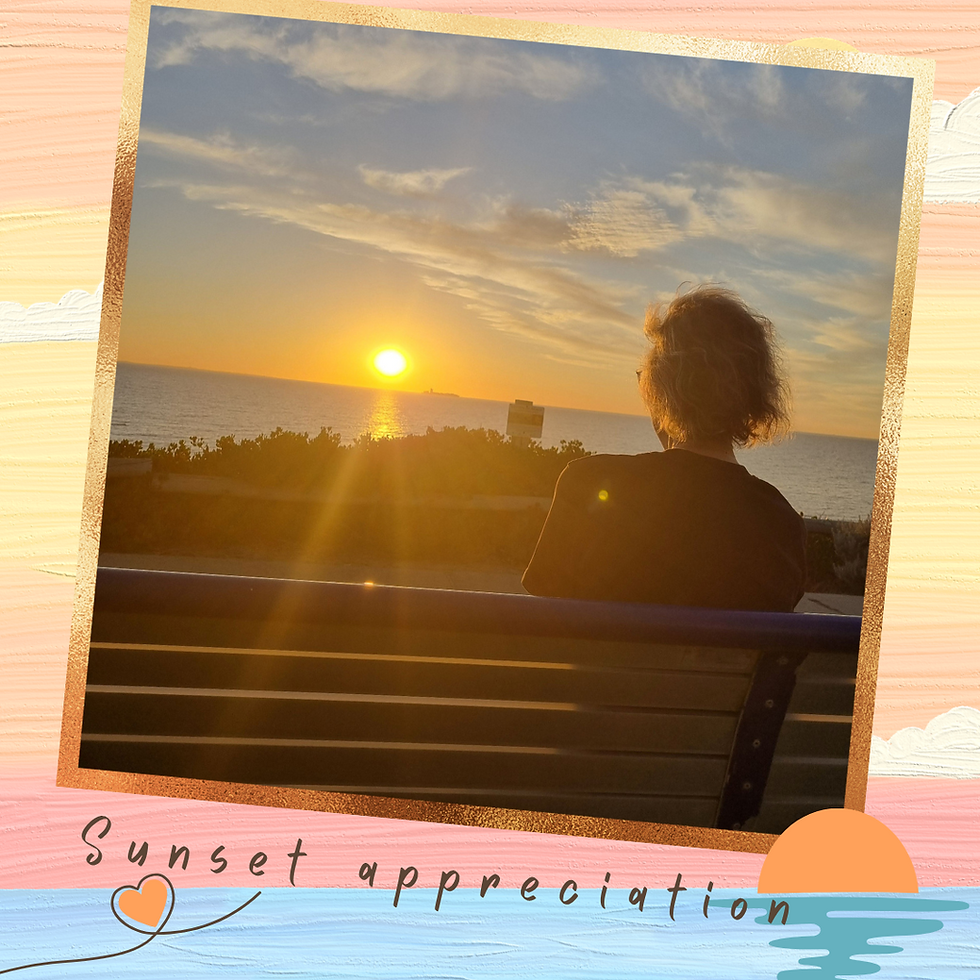
Perth is Australia's most isolated capital city (and the world's most major one, as noted above). It has a whole different vibe to the east coast. The city was built on mining riches but remains pretty much a giant country town. I rather like that it's stayed relatively small and that its natural beauty remains untouched. To me, the sunsets are the best part of the Perth experience, so I am finishing this section of the post off with a final sunset appreciation shot.
Cairns: The tropical north
Cairns is a city on the tropical northeast coast of Far North Queensland, the giant state where I make my home. I'd been to Cairns on the sleeper train with a university friend way back in 1990 (with only analog photos to tell the story, of course), but returned again in May 2025 to attend a reconciliation symposium as part of my work for the national mental health in education initiative.

Cairns (Gimuy) was colonised by Sir William Wellington Cairns in 1876 following a gold discovery in the nearby river. During WWII, the city was a staging ground for the Allied Forces in the Battle of the Coral Sea.
Cairns is a major tourist destination in Australia, with access to two UNESCO World Heritage sites: the Daintree Rainforest and the Great Barrier Reef, one of the Seven Natural Wonders of the World.
We were only in the city for two nights, but enough to have the time to get up early and go for a walk along the waterfront. What a gorgeous sunrise!

Hobart: The capital of the Apple Isle
Tasmania is somewhere I keep telling myself we should properly visit as it's a beautiful place, with scenery akin to my homeland Aotearoa (albeit a discount version!). So far I have only managed to get to Hobart and that was only for a couple of days, again for work. I didn't see anything other than the hotel and the veterinary practice for the first 24 hours. I was there in 2024 for another site visit for the learning needs analysis in my role in learning and development for a national veterinary emergency organisation. This was April, and the day after the site visit was ANZAC Day, so I elected to use the public holiday to explore Hobart. I loved wandering around the stunning harbour, the second-deepest natural port in the world after Sydney Harbour.

Hobart (Nipaluna) is the capital of the island state of Tasmania. It sits on the south-east of the island on the Derwent River estuary.
The city lies on Muwinina country and was colonised in 1804 as a British penal colony. Whaling was once a major industry.
It was named after Lord Hobart, the British Secretary of State for War and the Colonies from 1798 to 1804.
Today, Hobart is known as the end point of the annual Boxing Day Sydney to Hobart Yacht Race, a 628-nautical-mile journey.
Unfortunately, being ANZAC Day, there was nothing much open and no one around after the dawn parade. It probably wasn't the best idea I've ever had! Still, I had the chance to wander around in peace and soak up the pretty landscape.

The old stone architecture stood out to me as a distinct feature of Hobart. This is old in Australian terms, since the country was only colonised by Britain and settled by British and European migrants from the early 1800s. Old stone buildings are totally my vibe.

Melbourne and surrounds: The closest Australia gets to Europe
Melbourne, I do love your European vibe despite your absolutely rubbish weather. The city sits in a pivotal spot at the bottom of the continent in the state of Victoria, across Bass Strait from Tasmania. The weather is changeable and often windy, so I'd struggle to live there, but I do love to visit. Melbourne is the city I have experienced the most during my time in Australia, my tally of visits added to rather a lot since taking up my current role with the national mental health in education initiative.
Melbourne is the capital of Victoria and the second-most populous city in Australia after Sydney, occupying most of the northern and eastern coastlines of Port Phillip Bay.
The region has been home to indigenous peoples for over 40 000 years. The traditional custodians of the land are the Boonwurrung, Woiwurrung, and Wurundjeri.
The city was colonised by British free settlers in 1835 and named after the then Prime Minister, William Lamb, 2nd Viscount of Melbourne.

The above and below snapshots of Melbourne city contain images I've collected over various trips, including the first time I experienced the city in 2008, when my husband took a short trip to celebrate our 15th wedding anniversary. That's me back then in the above shot at Melbourne Park, where the Australian Tennis Open is held.

I love Melbourne architecture and it honestly does feel as if you're somewhere in Europe, or the United Kingdom, when you wander the streets. Melbourne, founded on gold rush money from the 1850s boom period, is considered the cultural capital of Australia and I do think it lives up to that name. I am sure that is due in part to the cold weather. Culture and sun and beaches do not seem to go hand in hand!

Here are some shots of the stunning Abbotsford Convent where I was fortunate enough to spend two days in August 2026 for work meetings. What a beautiful place to hold a work event! I love the way the owners have leaned into the converted convent vibe. Check out the takeaway hot beverage cup from the on-site bakery. Cute.

Melbourne is a large, multicultural city with loads going on for culture buffs, but it is also has some stunning beaches. They are less in the Queensland vein of swimming and surfing and more of a "let's go for a walk along the beach" kind of thing. In the winter of 2026, I spent six days staying with my friend, MB, while she house-and dog-sat for a former colleague who was travelling in Europe for an extended period. The house MB was looking after is located in Mackinnon, not far from the eastern beaches.

My stay with MB was basically a tour of the beaches along the eastern coast adjacent to the city centre. The above and below collections showcase Australia's answer to traditional British and European beaches with colourful beach huts. This is Brighton Beach, sans pier and kitschy rides and candy floss... You can read about my adventures in The OG Brighton here.

The above shots give some perspective on where the beach sits east of the city. There's rather a lovely view of the city skyline, even on a cloudy, wintery day. Oh, and MB took this fab panoramic shot. I just had to include it!

Continuing our tour of East Melbourne beaches, we strolled along the beach track at Mordialloc (cool name for a place!). I loved the changing cloud action that afternoon and the eventual rainbow that appeared.

The weather was brisk, to say the least, and on a couple of days quite brutal. It's the wind that gets me in Melbourne, chilling through to my bones. Cold I can handle. Wind I cannot.

I used to think that beaches in winter were depressing, but after our winter expedition to Portugal in 2025, I've decided I rather like the winter drama. There are no waves crashing onto Melbourne beaches like there are on Portugal's Silver Coast, but the moody atmosphere and chance to walk without sweating (as we consistently do in Brisbane) makes for a nice change.

St Kilda is probably one of the most famous Melbourne beaches. It sits closest to the city centre and is an interesting mix of posh (expensive) housing and an eclectic vibe. The below shots were mostly taken during our 2008 15th wedding anniversary visit. The sunny beach along the bottom row was taken Christmas 2019, when E and I met up in Melbourne after she'd been in Tasmania.

St Kilda's close location to the city affords terrific views of Melbourne city. The top shot was taken in April 2008 and the bottom in December 2019.

I've not seen much of the state of Victoria outside of Melbourne, but we did a short trip down the Great Ocean Road in 2008 and stopped off at the mighty Twelve Apostles. The Apostles is a group of limestone rock stacks off the shore of Port Campbell National Park, around 275 kilometres west of Melbourne. The rock pillars were shaped by coastal erosion over thousands of years from limestone cliffs that are roughly 8.6 to 14 million years old.

The above and below images capture different perspectives on the giant rock formations, some of which taken by me and others taken by E when she visited with a group of friends in 2025.
Fun facts: There have never been twelve apostles. They were originally known as the Sow and Pigs but the name was changed to the biblical reference in the 1920s for marketing purposes. There were originally nine stacks but marine erosion has caused the stacks to collapse over time and today there are only seven left standing.

Geelong is a city that sits west of Melbourne, at the western end of the smaller portion of Port Phillip Bay. Mostly known for its Australian Rules Football team, the city has undergone a facelift in recent years. The harbourfront is gorgeous now! MB and I took the train from Mackinnon, about an hour's journey.

We had a wander around the harbour, enjoyed a delicious vegetarian crepe lunch at a waterfront restaurant, and had a poke around the local gallery. I loved the funky bollards dotted along the waterfront. The bollards were created by the late artist, Jan Mitchell, in the mid-1990s. There are now more than 100 hand-painted wooden sculptures representing the history of the city. They were made from reclaimed timbers and piles from old city piers. Geelong, you were a lovely surprise!

It was lovely spend time with MB in Melbourne, go for long walks along the beach, visit the Immigration Museum and National Gallery, and generally enjoy the experience of house-and-dog-sitting. The visit was nicely timed to coincide with the 10th anniversary of the discovery and removal of a brain tumour that has left me completely and permanently deaf in my right ear. This is us on my final day in Melbourne on 23 June 2026, celebrating the gift that it is to exist and 20 years of friendship.

And of course, what would be a section ending of this post without some sunrise shots! These gorgeous images were taken from my hotel room on my first Melbourne work experience in my role with the national mental health in education initiative.

Canberra: Our nation's capital
I have actually been to Canberra four times but only have a few photos to document my experiences. My first trip was in 1993 for a few days to visit a friend. I went to the National War Memorial and National Science Centre on that visit, but of course I only have analog memories of these fabulous museums. The second visit was in 2017, but just for a day, to film interviews for a course I was developing for my academic work at the University of Queensland. The third visit was in 2024, to conduct a site visit and learning needs analysis for the emergency veterinary organisation I worked for at the time. This is the only photo of I have from that visit, taken on my morning walk near the hotel.

Canberra (Kanbarra) is Australia's capital city, making up the bulk of the Australian Capital Territory plonked in the state of New South Wales.
Canberra was established in 1913 following the federation of the Australian colonies to serve as the national seat of government. it is an entirely planned city, designed by American architect, Walter Burley Griffin.
The region has been inhabited by the Ngunnawal and Ngambri people for 21 000 years.
Following on from staying with MB in Melbourne, as showcased above, I flew to Canberra for the June 2026 national meeting of the mental health in education initiative team. Canberra in winter is super cold but so much more bearable than Melbourne as it's humid and there's no wind. These shots were taken on my morning walk from the hotel, in just-below-zero temperatures.

On that same morning walk, I covered the 2.5 km-each-way trek from the hotel to Parliament House. How terrifically moody does the seat of government look in the morning winter fog!

My second morning walk serves to showcase the magical Lake Burley Griffin on a misty winter's morning. It nicely completes the Canberra section of my post with some stunning sunrise shots.

That's it for now for my pictorial trip around the Australia I inhabit and have experienced since making the leap across the Tasman in 1989. I will continue to add to this post if I have other opportunities to explore the country beyond Brisbane. I will add to the existing images with my collection of analog photos, once I dust off the old photo albums and haul the images into the current century.

There's not much more to say to reflect on my experience of Australia that I haven't already said at the start of this post. To reiterate, though, this country has been amazingly good to me and I have had opportunities far beyond what would have been afforded to me had I remained in my homeland. There's a lot to say about the positives of this big, brown land, with its unique brand of beauty and a country that was forged out of the harsh landscape and its convict beginnings. There's also a lot that needs fixing, largely righting the wrongs of its colonial past. Somehow we must create a path forward that reconciles the atrocities of the British settler colony and the marginalisation of the land's indigenous peoples. Australia still struggles with its identity and place on the world stage, I think, as I struggle with my own identity. My love for this country and my home in Brisbane sits in such conflict with how I feel about my place here. I am not sure what it means to be Australian or to belong here, but for now, this is my home. I am grateful for the safety and quality of life I am privileged to enjoy, especially considering the dumpster fire of a world we currently inhabit.


Comments