Our whirlwind 19-day European bus tour
Updated: Sep 19

A little bit of background
The year is 1996. My husband (referred to as W in my posts) and I, aged 25, are on our first ever bus tour. The tour is part of our first ever world wanderings, a trip that is the culmination of years of dreaming and 12 months of planning and saving.
I wrote this post in 2024 (and made some updates in 2026) using my memories to guide me and the journal I kept at the time. This post is as much about documenting our experience as it is looking back in time to travel in the 1990s, before the days of Google, smart phones and Uber.
The whole first big adventure is also a snapshot in time of my 25 year-old self and my first big international adventure. Reading through my original journal, I sounded so wide-eyed and in awe of everything. That's because I was!
There is so much ground to cover to document our bus tour. I've made the post into two. This post charts our wanderings through France, Switzerland and Italy. The second post explores Hungary, Austria, the Czech Republic, Germany, Luxembourg, and Belgium.

Our 19-day bus tour of Europe was a big chunk of our first big adventure. Our wanderings started with an LA stopover. Then we flew to Europe for a whistlestop London experience and a long weekend in Berlin, our first steps onto the mainland of the continent. After the bus tour we hired a car and wandered a good bit of England, Scotland and Wales, on a two-week self-drive road trip, staying in B&Bs. Whew!
I have to place a caveat on the photos that I've included in the post. They were taken on a 1990s camera, and scanned from the printed photos that are now almost 30 years old. The quality isn't great, to say the least. The 1990s fashions are also not great! To balance out the woeful quality photos, I've included some current ones from a range of sources, plus some gorgeous photos that our daughter, E, took in Italy during her solo trip in 2024.
Our whirlwind European tour
We didn't have much money in those days. We couldn't afford a honeymoon when we were married in 1993 so our adventure three years later was a big deal to us. I had no idea that I'd have travel in my future, so tried to pack as much as possible into our six-week trip. We did a Trafalgar tour for our first experience of Europe, taking us on a 19-day chaotic adventure through France, Switzerland, Italy, Hungary, Austria, the Czech Republic, Germany, Luxembourg, and Belgium. The tour started and ended in London, crossing the Channel on the ferry from Dover to Calais and back again on a charter bus.

Why did we decide to do a tour, the two of us self-confessed introverts? Our reasoning was that it was the best way to gain a taste of continental Europe for our first foray. It seemed a lot easier to place our wanderings in the hands of a tour company in those days, back before we were researching and booking things online ourselves. The world seemed less accessible then, something to wonder about and explore, armed with only what we'd read in books or seen in films and on tv to guide us. That sense of wonder was kind of cool, though. It made everything we saw and experienced seem so incredible! That may sound old fashioned now, but I guess it was part of the adventure, knowing so much less about where we were heading.

The pros and cons of our decision to do a tour will become apparent as you read through the post. I've posted my overall reflections on the tour experience at the end of the second post. My reflections on France, Switzerland and Italy are at the end of this post. Right, let's go!
Leg 1: London to Paris
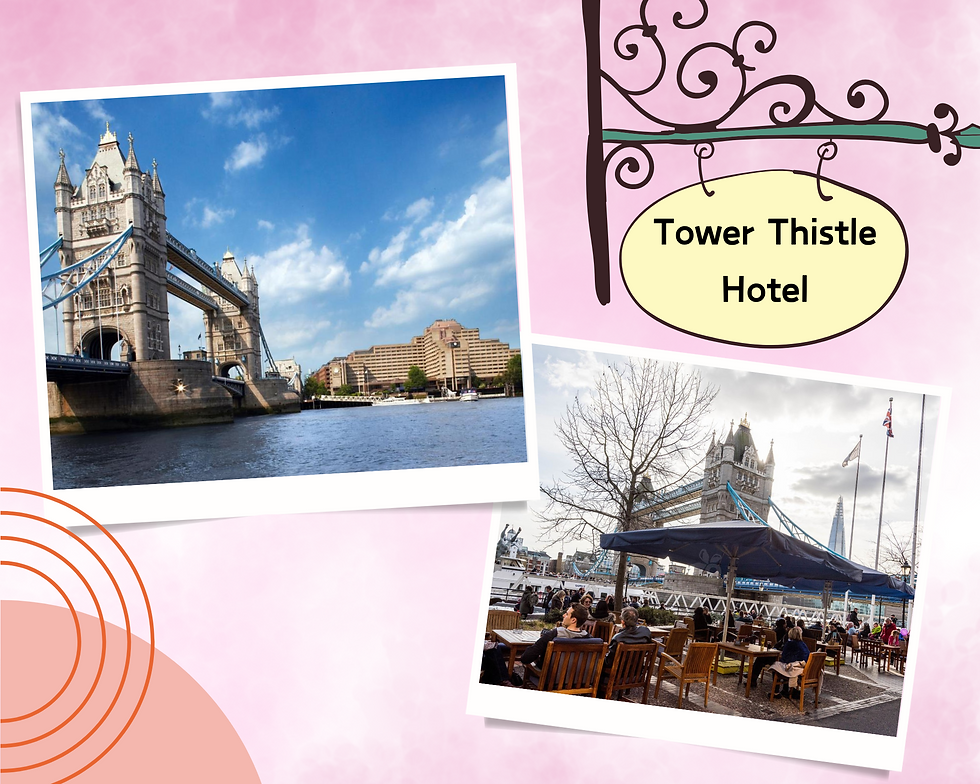
Running around madly is something unique to Antipodean travellers, I assume, as we live at the bottom of the world, minor players on the world stage, and so far from anywhere else. The flight across the globe to Europe is expensive, long, and gruelling, so packing in a lot of stuff in a short time is the kind of energy brought to travels. Our six-week first ever world wanderings were packed, neither of us anticipating that we'd have the chance to travel again in the future. The whole trip felt like a once in a lifetime deal. After only a week away from Australia, we'd already been to Los Angeles, London and Berlin. Now we were ensconced in the Tower Thistle hotel, preparing for the 5.30am tour start the next day from that hotel. The Tower Hotel, as it's now called, is quite well known as it features in lots of films and TV shows set in London, largely for its proximity to Tower Bridge and its café that sits adjacent to the Thames.
After a week on our own, we approached the tour with both excitement and trepidation. I had dreamed of visiting the places on the tour itinerary since I was a child, but I wasn't sure how I'd go cooped up in a bus for almost three weeks with a bunch of strangers. Day 1 of the tour was a long, too. London to Paris is 450 kilometres, around seven hours of travelling time by car or bus. That includes two hours from London to Dover, the ferry crossing (around 90 minutes) and then three and a half hours from Calais to Paris.

On brand for us, we were in the lobby well before 5.30am, but our tour director, Graeme, did not arrive for some time. I remember a bunch of people milling around, the air thick with excitement but also that slight awkwardness of knowing you will be bonded to the group as the tour progresses.
The first part of the trip on that first day was on board a charter bus through London out to Dover. The Channel Tunnel had opened two years earlier but we were to cross the English Channel on the ferry from Dover to Calais. I've since taken the Eurostar from London and Paris (twice, actually), but I am glad we got to experience the channel crossing on the ferry.


Crossing the English Channel to France by ferry is possible from Dover to Calais or Dunkirk, Newhaven to Dieppe, or Portsmouth (or Plymouth or Poole) to Northern France.
LeShuttle (a car train) runs from Folkestone to Calais. It takes 35 minutes to cross via the Channel Tunnel.
The Eurostar passenger train travels through the 50 km Channel Tunnel from London St Pancras station to Paris. The trip takes two hours and 20 minutes. The underwater section of the Tunnel takes 20 minutes to cross.
The trip through the countryside to Dover was lovely. It was such a welcome change to be in open, green spaces after a week in crowded cities. Being on the tour bus with 40+ other people was a bit of a shock, though. We initially felt very hemmed in and wondered what we had signed up for!
Even after only a few hours on the tour it was a relief to be out of the bus and on the ferry once we were off to France. Such a cool experience! The crossing was smooth and it was awesome to see the white cliffs at Dover as we departed. We'd had no time for breakfast with the early start, so we bought something to eat and amazingly, I kept the receipt! I think it was the chicken tikka sandwich that did it to me. We'd never heard of chicken tikka!

I don't remember much about Calais and I don't have any photos. I know we changed buses once we disembarked from the ferry and met our Belgian bus driver, Luc. It felt like the tour was beginning for real then. Graeme allocated us to seats and told us we'd be rotating around the bus as the tour progressed. I was still feeling unsure about our decision to do a tour but super excited to be heading to Paris. We felt a bit overwhelmed on that first day and the dramatic switch from being on our own to being part of a big group, realising that we were to be with them for almost three weeks. Eek!
The trip to Paris took us through picturesque countryside along the motorway. We didn't stop other than for refreshments at a roadhouse, but Graeme pointed out the World War One battlefields in the Somme and Vimy Ridge areas as we passed by. The roadhouse stop gave us the chance to scope out our fellow travellers. We introduced ourselves to a New Zealand couple whom I will refer to throughout this post as T&D. We clicked with them instantly and came to rely on them for company throughout the trip.
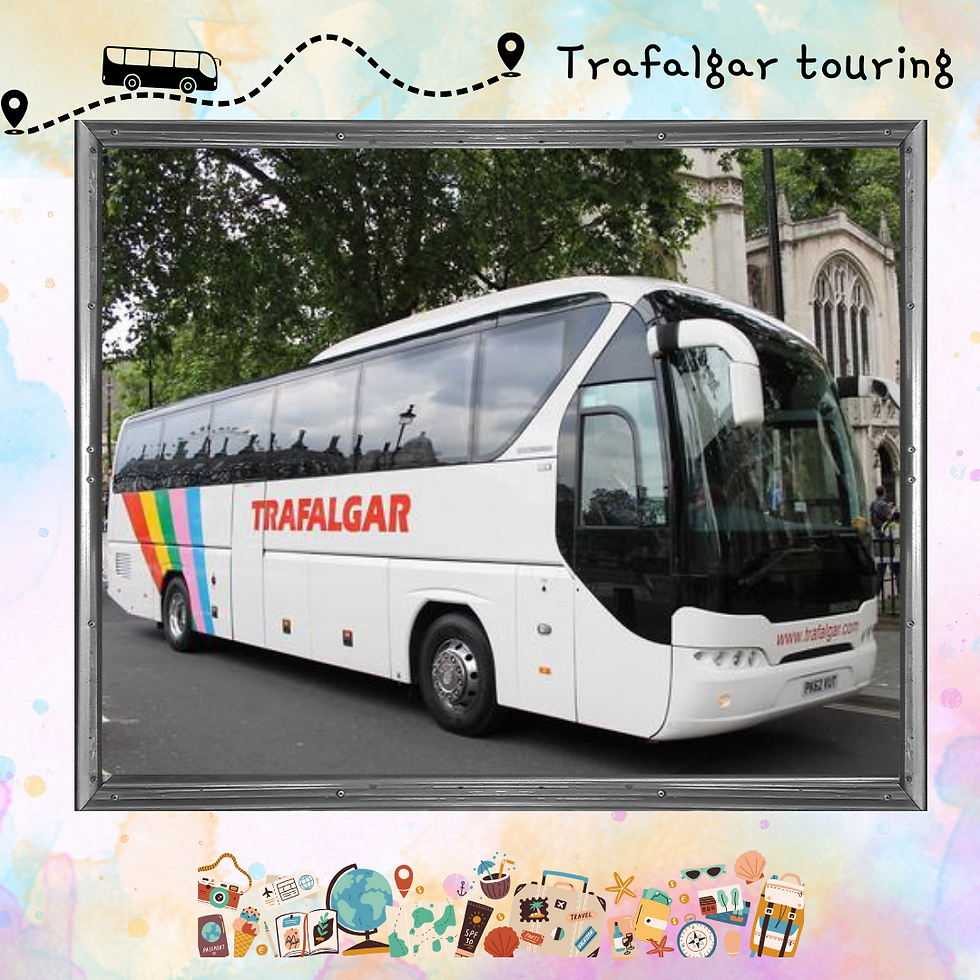
I recall that most of the rest of the group were Canadian, American and Australian and all much older than we were. There was a family with a teenage girl and a woman around our age travelling solo, but the age bracket definitely leaned north of 50. (That sounds odd to write now that I am in that age bracket!) We'd opted for an open-age tour rather than something specific to our age group. The tour itinerary factored the strongest in our decision, but also because we hardly fit the under-25-party-your-way-around-Europe vibe!
We drove into Paris late on Day 1, after what seemed like hours and hours of travelling. I couldn't quite believe that I was heading into Paris. I was quite nervously anticipating my experience of the city. I kept craning my neck to catch a glimpse of the Eiffel Tower but all we saw were the city outskirts, framed by industrial and apartment buildings. It all seemed a bit overwhelming, but that was probably just a mixture of excitement and the super early start to the day.

My first impressions of Paris did not live up to my expectations and we hadn't yet seen what I thought the city would be like. I have no photos of the hotel where we stayed for two night, nor any detail in my journal about its name or location, but it was in a less than salubrious part of Paris, that's for sure. Our tour director seemed annoyed at the quality, but to us it was fine. Our room was small but clean and the bed was comfortable. As an aside, I've looked at Trafalgar's website recently, and I can see the hotels listed for all the tours. We were not given this information prior to our tour commencing so each one was rather a surprise. We found it all terribly exciting as we'd never stayed in a hotel before!
We paid $4000AUD for the two of us for the tour, and that was a lot of money to us at the time. We were given a long list of optional extra tours to select from and pay for on that first day. We soon learned that the so-called optional extras weren't really optional at all if we wanted to experience the Big Ticket things! I remember Graeme walking down the bus with a form for us to fill out to select our options. How old school that sounds now.
Our first optional tour was an evening drive around the city. Trafalgar call these outings "illuminations tours" and they are the only way to see cities at night. The highlight, of course, was our first glimpse of the Eiffel Tower in all its sparkly greatness. This was a real pinch-me moment for me, to see such a famous structure with my own eyes! I know it's just a tower and there's nothing all that special about it as a structure, it's just the sheer iconic nature of it all. The Interwebs tell me that the Tower is the most visited monument with an entrance fee in the world.

The Eiffel Tower is named after engineer, Gustave Eiffel, who company designed and built the tower from 1887 to 1889.
The tower is built of wrought iron, constructed for the 1889 World Fair that marked the centenary of the French Revolution.
It stands 330 metres and has three accessible levels. The top level's upper platform is 276 metres above ground, the highest public observation deck in the European Union.
Before it got dark, we had braved late afternoon Paris traffic and drove past the Arc de Triomphe. We also stood out front of the beautiful Sacre Coeur church, although we didn't go inside. There was generally a lot of rushing about that afternoon, so we only had glimpses of iconic sights. This we came to realise is one of the cons of doing a tour. Sure, you get to see a lot of stuff in a short time - and it's hassle-free - but most of it is seen from the exterior and often only for what feels like a few moments.

The Basilica of the Sacred Heart of Montmartre is a Catholic church that sits atop the butte of Montmartre, overlooking the whole city.
Construction began in 1875, was completed in 1914, and consecrated in 1919. It is 85 metres long and 35 metres wide, designed to Romano-Byzantine style.
The church is made of Travertine stone and is estimated to have cost 7 millions francs, funds drawn entirely from private donors.
Later we stopped in Montmartre. I was excited to see the hilly streets and white buildings, just as I imagined Paris to be. My crummy photo doesn't do it justice, but I can still remember how thrilled I was to be able to see Parisian buildings up close.

We stayed in Montmartre for dinner and ate with T&D at a restaurant recommended by our tour director, Au Petit Creux. I remember we ordered a hot dog and lasagne - not very French!

It was lovely to have the chance to wander around Montmartre in the evening after all the rushing around. We bought a Paris print from a stallholder near where we ate dinner. The print cost only a few francs, a fraction of the cost to frame it when we got home. The print still hangs on our wall to this day and I love it. Here it is:

We decided we'd buy one item from each country we visited, mostly because we didn't have much money and we weren't sure how our trip savings would last. We were also away for six weeks and we tried to keep it light. The Paris print was our France memento.
Day 2 of the tour was spent exploring Paris, partly from the bus and partly on foot. We had a local guide, Stephane, who showed us around Notre Dame, with its magnificent front façade and stained glass windows. I loved the gargoyles and the whole gothic vibe! I don't have any surviving photos of Notre Dame, but here's one I took during my 2022 Paris wanderings.

Notre Dame de Paris is a medieval Catholic cathedral and basilica on th Ile de ls Cite on the Seine River. It is considered one of the finest examples of French Gothic design.
Construction began in 1163 and was largely completed in 1260 although modified across the centuries.
The church suffered extensive desecration during the French Revolution
The Liberation of Paris was celebrated at the cathedral on 26 August 1944 with a special mass led by General de Gaulle.
The rest of the tour was from the bus, passing the Louvre, the Sorbonne, the Opera House, the Arc de Triomphe, and down the Champs Elysees. It was something of a whirlwind experience of iconic structures, but that's what you get on bus tours! It was only years later, when I visited Paris again and stayed for several days that I really felt like I could properly appreciate the city.
The mad dash around the city in the bus was included in the overall tour itinerary but to cruise the Seine River and go up the Eiffel Tower was a paid optional extra. We signed up for it of course! The river cruise was fab for the wonderful views of Parisian buildings and the many bridges with their golden columns. I think this is where my love affair with European architecture began. Unfortunately, it was cold and windy on the river cruise and we couldn't hear the guide. Not to worry, the views were spectacular.

One of the advantages of a guided bus tour is the ability to skip the line at major sights. As it was July, the queue at the Eiffel Tower was long and we would have waited for hours if we'd been on our own. Remember that this was back in the day before timed entry tickets could be purchased online. It was rather nice to be able to take the elevator straight up to the second floor.
I am terrible with heights so I felt nauseous when I looked down from the viewing area. The views are amazing, though, even if it wasn't a sunny day when we visited. The Tower is so imposing when seen up close, too. I had no idea of its size until that day. It stands at 330 metres, around the same height as an 81-storey building. It's the tallest structure in Paris.

The afternoon was free time and even after only two days on the tour, we were quite glad of some time to ourselves. Of course, back then there were no mobile phones to Google where to go and the free time is only vaguely explained in the tour information. We found ourselves with a free afternoon but unsure how to use it. This is where the Google days of travel are better for figuring out what to do and how to get to places on the fly.
We opted for the Opera House drop off point and had a wander around from there. In our attempt to be Parisian, we bought crusty bread rolls for lunch from a stall and crunched through them sitting on the steps of the Opera House. I remember two things from our pitstop: One was how rude the server was where we bought our lunch as we asked for our food in English, not able to speak French at the time. I know that sounds stereotypical, but that was our experience. The second thing that struck me was the contrast between the stylish Parisians we saw on their lunch breaks and the beggars on the steps of the Opera House.

The sun finally came out and it was a glorious afternoon. After lunch we had a poke around the huge Galeries Lafayette department store with its impressive dome and stained glass ceiling. It was nothing like any shops we had in Australia! Awesome. The below photo was taken on my 2022 visit to Paris as I don't have any photos from our tour.

We walked to the pick up point at the Louvre then and spent some time enjoying the sunshine and people-watching. It was a shame that we didn't go into the Louvre, but the line was long and we wouldn't have had time to see much of the museum's treasures. Again, I had the chance to visit later, when I was in Paris in 2022.

My final impression of Paris is of our evening search for something for dinner, not included in the tour. Wandering around the dodgy area near our hotel proved fruitless, and a little scary, if I am being honest. In the end we found ourselves back at the bakery next door to the hotel where we bought a light meal and had a relaxing evening in our room.
For more Paris wanderings, see my post on my 2015 work trip and 2022 adventure with my daughter. I also went to Paris for the day to visit a friend when I was working in London in 2022, only a few weeks after my visit with my daughter.
Leg 2: Paris to Lucerne
After running around Paris madly, Day 3 was a big travelling day as we made the 645 kilometre trek from Paris to Lucerne in Switzerland. Days spent travelling huge distances on the bus were par for the course on the tour, punctured by a stop along the way and bookended by two-night city wanderings. We covered an awful lot in th 19 days and we certainly got to see the countryside from the bus, but I'm not sure it's the best way to experience a place.

The first part of our day was the 300 kilometre journey from Paris to Beaune, taking us around three hours. We headed south-east from Paris, stopping at the wine-producing town of Beaune. The town is gorgeous, all quaint cobbled streets and tiny shops. Even though our stay was short, I loved it, and felt much more attuned to my surroundings than in Paris. We did a wine-tasting thing in a cellar although it was a bit lost on me, a non-drinker. Lunch was fresh crusty bread and fruit as we wandered around the town.

Beaune is the wine capital of Burgundy in the Cote d'Or department between Lyon and Dijon. It is a walled town with battlements and ramparts.
The town is the centre for wine industry services (tractors and equipment) and several wine-related institutes and education facilities.
The name derives from the Latin Belena, the name of a spring around which the town was established.
The second part of our huge travel day was spent sitting in the bus as we made our way across the absolutely beautiful French countryside to Switzerland, some four hours and 365 kilometres. That was it for France, until our return to Calais for the ferry back to Dover at the end of the tour.
We crossed into Switzerland late in the afternoon via Basel, an industrial town on the border. Switzerland was simply stunning, just like the chocolate box pictures! Switzerland looks pretty even taken from my ancient 1996 camera!

We stayed for two nights in Engelberg, another 35 kilometres up into the mountains from Lucerne. Our resting place was for Leg 2 was the stunning Europaischer Hof Hotel Europe. The hotel is a gorgeous 19th century building with chandeliers in the common areas, large foyers and wide hallways. It was renovated in the early 2000s, but the photo below from the hotel website is still how I remember it.

The view from our room was amazing! That night, we had our first hotel dinner. I noted in my journal at the time that it was our first 'proper meal' in several days. I wrote down what was on the menu: soup, veal, and chocolate mousse. These were my pre-vegetarian days...

Engelberg is a village resort and a muncipality in the canton of Obwalden.
Earliest mention of the village is 1122 with the founding of the Benedictine monastery, known as Engelberg Abbey.
Engelberg sits in the Uri Alps and is surrounded by several mountain summits.
The highest village elevation is 1013 metres at the Abbey. The highest mountain elevation is at Mount Titlis, some 3238 metres.
Day 4 was a beautiful day in the mountains and we were thrilled to be heading up to Stanserhorn in the morning. The mountain sits 22 kilometres north of Engelberg. Stanserhorn is in the Uri Alps but in another canton to Engelberg - Nidwalden - although part of the mountain crosses into Obwalden. The mountain's elevation is 1898 metres.
The mountain is a popular hiking spot, but we took the funicular railway and the cable car up to the summit. You can see the ticket from the funicular in the below collage that I kept. The three-section funicular was completed in 1893. A cable car was built in 1975 to replace the two upper funicular sections. The funcicular travels for 10 minutes from Stans to Kalti, the middle station of the journey up the mountain. This is still how one reaches the top today, although a high-tech double-decker cable car replaced the one we rode in from 2011.

I was more than a little terrified travelling on the funicular and cable car as neither felt safe to me. Despite the foggy day, the views were worth the anxiety of the journey to get there. My photos don't do the magnificent views justice, complete with cow bells clanging in the distance. We climbed up to the lookout for a better view and felt quite short of breath at that altitude. It's incredible, right, even if my photos aren't great.

After coming back down the mountain we drove into Lucerne, one of the prettiest cities I have ever seen. Before lunch, we had made a stop at the Lion Monument. I still recall to this day being moved by the carving in the rock face of a lion defeated in battle, the agony of defeat so clear on the lion's face.
Lucerne is a city and municipality in central, German-speaking Switzerland. The main spoken language is the dialect of Alemannic Swiss German.
The city dates back to 750 BCE with the founding of the Benedictine Monastery of St Leodegar.
The city sits at the outfall of Lake Lucerne into the river Reuss, occupying both banks and the lowest reach of the lake.

Lunch was at Restaurant Stadtkeller, a super touristy fondue and Swiss folklore show. Yeah, it was cheesy - see what I did there? - but fun just the same. The fondue was very rich and I found it too much for my palate, but there were also sausages and potatoes and a yummy dessert cake. The folk show included yodelling, flag throwing, dancing, and Swiss horns and bells. Hilarious.

We had free time to wander around the city after lunch. The city simply took my breath away! We'd had fun in the morning on our mountain trip and at lunch, but it was nice to be on our own for the afternoon, without a schedule, just wandering around and soaking up the atmosphere. We walked across the famous covered bridge and along parts of the Reuss river. We had intended to buy a watch but sadly what we saw was out of our budget. We opted for a totally kitschy souvenir - a carved wooden plate.

Dinner was in our lovely hotel again, and another three-course meal of soup, a main, and a dessert, that I noted in my journal was something called "banana creme". Three-course meals aren't really my jam, but the included meals meant we rarely had to buy food ourselves. We were exhausted after a long day and lots of walking but excited to be heading to Italy the next day!
Leg 3: Lucerne to Florence
That was it for our Switzerland taster! Day 5 and the next part of our journey took us to Italy, descending the mountains from Engelberg and through the Gotthard Road Tunnel.

Gotthard Road Tunnel runs 16.9 kilometres from the Goschenen in the Uri canton at its northern portal to Airolo in Ticono canton in the south. At the time of construction in 1980, it was the longest road tunnel in the world. It is now the seventh-longest.
The Tunnels runs the length of the St Gotthard Pass, an important trade route since the 13th century.
It is a major motorway tunnel (the A2 from Basel to Chiasso) but it only has one bidirectional tube with two lanes.
The motorway was super busy as we battled with other holidaymakers and a series of toll booths. I remember we sat for a bit at the Tunnel. I understand that it is is still a major source of traffic jams and traveller frustration.

It was interesting to see the landscape change as we headed into the Italian region of Switzerland, from clean, pristine alps to a drier landscape and Mediterranean buildings.
We made a stop in the Italian part of Switzerland stop at Lugano, in the Italian-speaking Ticino region by the beautiful lake. This was a journey of 170 kilometres from Lucerne, taking around two hours. We wandered around the cobbled streets, thrilled to be in Lugano on a market day, spending the last of our Swiss francs on fresh fruit and bread.

We passed by Lake Como later and skirted around Milan and Bologna before arriving in Florence late in the afternoon, having crossed the Northern Italian Plain and over the Apennine Mountains. It was a long day of travelling, but the beautiful and changing scenery made it all worthwhile. The journey from Lugano to Florence is 380 kilometres, taking over four hours.

Before checking into our hotel we drove to Piazzale Michelangelo, for incredible views of Florence. There's a replica statue of David at the piazza, too. Our tour group photo was taken at the lookout. It was a real scream. The local photographer climbed up on a ladder to get the whole group into the shot. Unfortunately that photo does not seem to have survived our many moves over the years. Shame. I do still have the below shot from the piazzale, showing the beautiful Arno River and the city buildings and bridges.

That night we had an included dinner at a local restaurant of pasta and fresh fruit. After dinner we walked with T&D, our Kiwi tour buddies, along the river back to the hotel, crossing the gorgeous Ponte Vecchio bridge that dates back to 1345. Amazing! Our tour director was reluctant to let four of his charges out of his sight, but we convinced him we'd be fine. I didn't want to miss the opportunity to walk over the Ponte Vecchio as we didn't do that with the group the next day.
I wasn't able to capture the glorious sight of the Arno River and the Ponte Vecchio as the sun set, but I have included these stunning shots, taken by our daughter, E, on her 2024 Italian adventure, when she was 23.

My photos are completely rubbish, so I also wanted to include this one of E's that does some justice to the magnificent bridge. What a difference a beautiful day and a 2024 camera makes!

I absolutely loved Florence, something I hadn't counted on prior to embarking on the tour. I was more fascinated by the Germanic parts of Europe at the time and counted Italy as a nice bonus rather than a must-see. Perhaps having no expectations helped, but I just loved the beautiful cobbled streets, the distinct architecture, and the stunning bridges over the Arno. Here's another of E's shots to properly show what I mean.

We had a lovely local guide, Francesca, to take us around Florence the day after our arrival, Day 6 of our tour. The Cathedral of Santa Maria del Fiore [The Duomo] was of course the highlight even though we didn't have time to climb to the top or even have a peek inside. I've included this simply stunning photo that E took from her climb to the top of the Duomo. I'm so sorry we didn't get to do this. It's one of the cons of doing a tour, seeing some things from the outside only.

At least we had some time to take in the magnificence of the cathedral from the outside. Francesca showed us the 5th century Baptistry exterior, with its eight-sided green and white structure and sculpted doors, particularly highlighting the gold panels depicting Old Testament scenes on the east door [The Door of Paradise]. The size and magnificence of the 13th century cathedral and Giotto's Bell Tower [85 metres high] just blew us away. The Cathedral is 153 metres in length and 90 metres wide and 90 metres high. The Cathedral's name, Santa Maria del Fiore, means Lady of the flower and is a nod to Florence, the city of flowers.

Other sights on our guided tour included the Piazza Della Signoria [housing another David replica where the original one stood, and a statue of King Neptune], Sante Croce gothic Basilica [dating back to the 1200s], and the Uffizi Gallery. Touring so many places in such a short time really limits the depth of the experience, sadly. We still fell in love with Florence, even though our visit was so brief and we saw most things only from the outside.

We did have an opportunity to wander around some typical Florentine streets, and I appreciated that. I still remember to this day the building in the below shot and how desperately I wished I could have seen inside it. This was the beginning of my love affair with European stone buildings 💞.

We visited famous the Peruzzi store on our tour and were treated to a leatherwork demonstration. I bought a wallet from the shop that I recall I used for quite some time after the trip.
We had then some free time to wander around the shops where we bought two little framed prints. The Ponte Vecchio one is pictured below, but I also bought one of the cathedral. We still have the prints on display at home.

Leg 4: Florence to Rome 🚌
Unfortunately, we only had the morning in Florence before we headed to Rome on Day 7 of our tour. We stopped at a massive motorway pit stop for lunch. We'd never seen anything like it coming from Australia - a huge petrol station with restaurants and shops.

The journey from Florence to Rome is 275 kilometres, around three hours of travel. We arrived in Rome late in the afternoon to experience our first bout of hot weather. I remember we had a nap after the busy day and later chose to attend the optional extra dinner at Mino's restaurant in the city. The meal was huge - five courses including an entrée, two pasta dishes, a meat main, ice cream and fruit. There was traditional music to entertain us and serenading musicians. I remember the hot waiter who was kissing female diners on the cheeks and doling out flowers. It was completely touristy and over the top but we kind of just rolled with it. That said, I remember a bit of butt-pinching went on and that totally WOULD NOT HAPPEN today [at least, I hope/assume not!].
Earlier in the evening we'd stopped by the baroque Piazza Navona with its gorgeous three fountains dating back to the 1600s. So many fountains in Rome! [That's my anxiety on display in this photo. How could I be sad in the face of that beautiful fountain?]

After dinner we went on the evening tour around the city [illuminations tours, as Trafalgar love to call them], stopping for the traditional coin toss into the Trevi Fountain. D hit some random guy on the head with her coin! We drove past the Vatican and the Teatro di Marcello, an old theatre with apartments on top. European cities sure are pretty at night!

Did you know?ℹ️
The fountain was finished in 1762 after some years of construction. It is 20 metres wide and 26 metres high. The name comes from Tre Vie - three ways - as the fountain sits at the meeting point of three streets. Since 2007, around 1 million euros of coins are extracted from the fountain each year and given to charities. The myth of the coin-toss into the fountain originates from the 1954 film, Three coins in the fountain. The story goes that throwing coin into the fountain means returning to Rome; two coins means falling in love with an attractive Italian; and three coins means marrying the person that you met.
Here are some stunning shots taken by our daughter, E, on her trip to Rome in 2024, including the fountain early in the morning, sans people. Beautiful images!

The plan was to visit the Sistine Chapel the next morning on Day 8 and we made an early start to try to beat the crowds. There was a huge line up for the Chapel so we were shuffled away by our tour director who stuck to his mantra of "no queuing for Trafalgar travellers". Our visit to the Sistine Chapel was postponed until the following day as we had two nights in Rome.
Instead we met our local guide, Franca, a deliciously exuberant host, who helped us on our city tour. A lot of battling crazy Rome traffic and seeing things from the tour bus ensued. We drove past the AD 315 triple arches of Arco di Constantino, Trajan's Column [built in AD 113 with a statue of Peter added later to the top], and Castel Saint Angelo, the Castle of the Holy Angel, a papal fortress and prison. We crossed the Tiber River and saw the Garibaldi and Palatino bridges, and an excavation site at the Roman Forum. We also saw Tiberine Island, dedicated to the God of Medicine. The space was converted into a hospital in the 16th century and apparently one must be born there to be considered a true Roman. We swung by the Circus Maximus at Palatine Hill. I could just picture Charlton Heston riding along in his chariot. [These were pre-Gladiator days after all.]

I loved taking in all the history of the Roman sights but wished we'd had time to get off the bus to truly experience them. Again, this is the downside of a tour, and a whirlwind one like we did. You see a lot but you don't really see things.

We did get off at the Colosseum. Yay! It was such a pinch-me moment to walk along the iconic structure but unfortunately for me, I needed a toilet break at that point in the day and spent most of our time there using the facilities. Oh, man. [No photos taken at the Colosseum, weirdly. I can't remember why not, other than my time being taken up finding the loo...] I've included this stunning shot of E's, with the ancient structure set against a brilliant blue sky.

We entered Vatican City mid-morning. The highlight of our whirlwind experience was our visit to St Peter's Basilica. The church is so ornate and at the time, one of the most magnificent sights I had ever seen. This time we were able to go inside where the church's beauty is even more evident. The basilica is huge, as is St Peter's Square, with its 240 metre wide space, Egyptian obelisk in the centre [brought by Emperor Caligula from Egypt in 1586] and the four-pillar deep colonnade.
The basilica was consecrated in 1626 and was built in Renaissance and Baroque styles. It is 220 metres long, 150 metres wide, and 137 metres high, with the capacity to seat around 20 000 people. Amazing! St Peter's Square [Piazza San Pietro] is also ginormous. I could imagine hordes of the faithful gathering to see the Pope, but during our visit it was peppered by a smaller crowd.

We tried to choose the optional tour extras carefully, to make sure we saw as much as possible with the limited time and budget that we had. Some of our fellow travellers seemed more keen on shopping so a bunch went off to do just that after our St Peter's experience. We elected to stay with the delightful Franca to see more of Rome. She was so enthusiastic about her home city and I loved the way she pointed out places of interest with what she called her 'magic wand', with its pink ribbon tied on the top.
Our first stop with Franca was at the Catacombs, the subterranean passageways used for burial between the second and fifth centuries. The dark and creepy passages, dating back to between the second and fifth centuries, led into Christian and pagan tombs inscribed with ancient symbols and graffiti. We loved it! Well old stuff is totally our jam.

There are more than sixty catacombs in Rome of hundreds of kilometres of underground passageways that hold thousands of tombs. Only five are open to the public; the one we visited as the Catacombs of San Sebastiano, 12 kilometres of tombs that are named after a soldier martyred for converting to Christianity. (Be sure to check out my 2022 Paris post , as I visited the Paris catacombs on that trip. So cool.)

Franca then took us to the Pantheon. The temple dates back to AD 113-125 and has been a Catholic church since AD 609. Until modern times, the dome was the largest in the world, at 43 metres in diameter and 22 metres in height. I only have the below picture of the exterior and the dome isn't visible, but trust me, it's impressive!

I remember the interior being simply magnificent, especially the shaft of light streaming in through the dome. There was a section inside that had been recently cleaned and the difference between that section and the remainder was so clear. As a history nerd, I just stood in awe of the building and the strength of its preservation over so many centuries.
This is a shot of the interior of the Pantheon from our daughter's 2024 trip. The dome is so beautiful, I just had to include this shot.

We had lunch in the square on which the Pantheon sits, trying to communicate with the server in a little sandwich shop. We also bought some delicious gelato but had to eat it super fast in the heat of the afternoon. Later we headed back to the hotel for a nap and then dinner in the hotel restaurant with T&D. We had pasta, of course!

The hotel, a Holiday Inn, was one of the nicest we'd stayed in so far quality-wise, but generic and lacking character. The rooms were large and bright and that was nice. The buffet breakfast was huge as well. We'd taken to filling up for breakfast and eating a small meal during the day, mostly fresh bread and fruit, as there was usually a substantial evening meal included. It stood out to us how much food our tour buddies were consuming as we travelled around. I don't know how they could fit in all those snacks and a big lunch as well as the hotel and restaurant meals. The amount of food on the tour was a bit overwhelming, actually.

Leg 5: Rome to Venice 🚌
Day 9 was spent returning to the Vatican then retracing our steps and covering a good chunk of Italy to travel to Venice. Rome to Venice is 530 kilometres, a journey of just over five hours. We went to the Sistine Chapel in the morning and left Rome after that. Another big travel day!

I was excited to have the chance to visit the Vatican Museums and the Sistine chapel. This tour was an optional extra and our Kiwi tour mates, T&D, opted to give it a miss. They got up early enough, though, to hang a happy birthday banner from their hotel balcony. It was my husband's 25th birthday that day. How cool to be turning 25 in Rome!

We were in the first group of people to enter the Vatican gardens that morning. We first walked around the Vatican courtyard and saw the huge pinecone and peacock, the Vatican symbols, and a rather hideous modern statue. The Vatican galleries were super impressive, with their ancient statues, tapestries and frescoes. One of the galleries can be seen in the above collage of St Peter's. We peeked out the window and got a shot of the gardens [below], somewhere that tourists are not allowed.

Later, we finally entered the Sistine Chapel. Franca showed up again to tell us about Michelangelo and the painting of the chapel. The ceiling is stunning, of course, but I was most surprised at how small the chapel was in reality, as somehow I'd expected something much bigger. It didn't help that the experience was wall-to-wall people. It was still incredible to see Michelangelo's work for real.

The wall frescoes date back to 1481, recounting the life of Moses and Christ. They were painted by Botticelli and Rosselli and others. Michelangelo painted the ceiling between 1508 and 1512, and it shows the Creation story and the Redemption of Mankind. The Last Judgement was painted on the end wall between 1536 and 1541. I couldn't quite believe I was there! I would have liked more time to take it all in, but we had to move on as we were leaving Rome after our visit.
On the way out of the chapel we had to go through the usual gift shop. We bought a print of the chapel ceiling [below] that still hangs in our home, from a nun behind the counter.

The rest of our day was spent travelling to Venice where we arrived around 5pm. We had to retrace our steps to Bologna then head across the Italian plain. Our hotel wasn't on the main island and some of our group complained about that, but we didn't care. The lobby was lovely and the rooms were clean.

Before we had dinner in the hotel, we went on the optional gondola ride. I mean, really, why was it optional? Who wouldn't want to do that? It was not the birthday experience we were expecting, though, as the gondoliers placed our group according to weight and we weren't able to sit together. I remember my terrible balance coming in to play as I tried to find my seat and the gondolier yelled at me in Italian until I sat properly where I was supposed to. Mortifying for a rule follower like me! It was a fun experience and a must-do, even if for us the weather was bleak and I found the canals were a bit smelly and dirty.

We awoke the next day Day 10 to the news that our bus had been broken into the night before. Nothing was stolen but then we didn't leave anything on there at night. The main door was damaged and there was a huge crack across the front windscreen. Luc, our bus driver, was quite understandably upset, so he took off for the day and tried to see about getting the bus fixed. [See photos below.]
We then headed off for our day in Venice, first travelling by launch to Rialto, the main Venice island. We went to a super cool Murano glass-blowing demonstration. Everything in the shop was beautiful but we didn't have to budget to buy anything. I was also worried about the glass breaking, whether we took it with us or mailed it home.
After the demonstration we had free time to wander around St Mark's Square and dodge the pigeons. It's a lovely square and all that, but Venice was my least favourite city in Italy that we visited. I think I found it dirty, even with the impressive basilica that dominates the square and the lagoon waters lapping the shore.
Here are some nice shots of St Mark's and the lagoon from our daughter's 2024 trip. E was lucky to have had better weather than we did even though our trip was in the middle of summer and hers was in spring.

My photos are less impressive than E's, sadly. The Bridge of Sighs can be seen below [bottom right hand photo]. It joins the gothic Doges Palace to the New Prisons and is so named for the sighs to be heard from prisoners as they took their last look at freedom.

We opted for the additional tour in the afternoon to pretty Burano, one of the islands in the lagoon. I enjoyed the launch trip out into the lagoon as Venice looked lovely from out there, and being on the lagoon gives a different perspective on the city.
Burano is a quaint place, with lace markets, canals and bridges and houses painted in an array of colours. The weather warmed up and we had a lovely afternoon. It looks grey in my photos, but that's not how I remember it.

I wrote in my journal that we had a delicious lunch of pasta, seafood, fruit salad, and biscuits, and left full of food to wander around the markets. I bought a little lace umbrella that I still have kept as a nice reminder of the day.

We waited for Luc to return with the bus once back at Rialto. He managed to get the door fixed but the windscreen stayed as it was. The spider web pattern can be seen on the glass in the below photo that remained like that for the rest of the tour. It would prove to be a problem at one of our later border checks but when we drove through tunnels, the light hitting the pattern created a surreal image in the bus. I imagine today driving a tour group around like that would not be allowed!

Leg 6: Venice to Klagenfurt🚌
I am calling this part of our tour Leg 6, but it was really just a whip through Austria on our way to Hungary at the end of Day 10. We were late leaving Venice as a result of the broken door and window so it was late when we arrived in Klagenfurt after a 3-hour 285 kilometre journey from Venice.

We were supposed to stay in Villach, but I assume the late departure from Venice necessitated the change. Below is my only surviving photo of our brief stay in Klagenfurt, showing the hotel where we stopped overnight.

The drive into Austria was beautiful; so green, orderly and pristine after the chaos of Italy. Klagenfurt is a quaint town - so neat and tidy - and the hotel had lots of character. We went for a short walk to explore the town after another three-course dinner and headed to bed early as it had been a long day.

Our France experience
I loved the journey through the beautiful French countryside and our stop at Beaune. My love affair with European landscapes still remains to this day and it's safe to say it started on this trip. I remember at the time feeling a little underwhelmed by Paris but perhaps my expectations of one of the world's most famous cities were too high. That said, I remain not entirely in love with the city still, unpopular opinion, perhaps, despite three subsequent visits. The Eiffel Tower was cool, as were the ornate buildings and bridges, and I loved the limestone apartment buildings and wrought iron balconies in Montmartre. I've had the chance to see a lot more of the city since this first visit, but I still don't feel a connection to it. I'm not really sure why, it just doesn't vibe with me.
Our Switzerland experience
How can one not love Switzerland! I thought it was a picture-perfect real life postcard and chocolate box cover, every bit as beautiful as I'd imagined it to be. I'd dreamed of visiting the country since I was kid, and every Heidi film and television show I'd watched came to life for me. The chalets, the cable cars, mountain waterfalls, and cows grazing in lush meadows - all a fairytale in reality. I was fascinated by the different influences in such a small country, with German and Italian clear and present in the places we visited. I was thrilled to have had the opportunity to experience alpine views, and the Swiss folklore show, even though mega touristy, was a real hoot. We found it easier to communicate than in France as English was more widely spoken so we didn't feel quite so gauche. We also enjoyed learning from our tour director about the Swiss way of life that fed into my understandings of the stereotype of a calm and ordered surface with the "Swiss bank account" actually a thing. It had been cold in Paris despite it being summer, and we enjoyed the warmer weather in Switzerland and the crisp mountain air.
Our Italy experience
I loved Italy! I said at the time that I would go back in a heartbeat and I have been back since this trip, actually, but not until 2022. I wasn't expecting to love Italy so much and that's may be why I did. The landscapes are drier than France, Switzerland, Austria and Germany but it is still beautiful. The buildings have an earthen feel that makes them unique. I loved all the narrow cobbled streets, and the buildings' shutters and balconies. I was dying to see inside them! We learned so much from Graeme about the chaotic, flamboyant, colourful way of life in Italy, and experienced a little of that when we battled the crazy city traffic). There's something of a celebratory vibe to Italy which I guess is what la dolce vita is all about. We travelled to Italy at at time when the lira was the currency. It was bonkers taking 50 000 lira out of a cash machine. We felt like millionaires!
It's the incredible sense of history that I love about Italy, the architecture and the art, and the lovely people. I found Venice a little dirty and smelly but St Mark's Square is still a stunning space. I loved all we saw and experienced in Rome and Florence, particularly the Pantheon, the Catacombs and the Vatican City, and the Arno River and its bridges in Florence. So many squares, fountains and statues!
What next?
After we finished the tour we picked up a hire car at Heathrow and did a self-drive for two weeks around the UK [minus Northern Ireland]. Read my post about our car trip around England, Scotland, and Wales to complete the posts on our 6-week first foray into the world. We eventually had the chance to visit Northern Ireland, and the Republic of Ireland, too, but not until our 25th wedding anniversary.


Loved reliving your journey in 1996